Category: News

  • Top 4 Real-Time Communication Development Companies for Cross-Platform Apps

    Top 4 Real-Time Communication Development Companies for Cross-Platform Apps

    Users access apps from phones, tablets, laptops, and desktops. They expect consistent experiences across every device. Building WebRTC apps that work everywhere presents serious challenges.

    The best WebRTC app development companies solve these challenges. They build once and deploy everywhere. They maintain performance across operating systems. They ensure users get the same quality on Android and iOS.

    Here are four firms delivering cross-platform WebRTC solutions in 2026.

    1. Geniusee

    Geniusee builds WebRTC applications that work across the web, iOS, and Android. One codebase powers all platforms. Consistent performance comes standard.

    The company’s mobile app development ensures reliable streaming even on poor network connections. Their cross-platform solutions maintain quality regardless of device or operating system. Healthcare organizations use their telehealth apps across multiple platforms. Educational institutions deploy their virtual classrooms on every device.

    Client feedback confirms their quality. An NPS score of 80. Over 65 five-star reviews on Clutch. Verified clients across industries.

    How Geniusee delivers cross-platform WebRTC solutions:

    • WebRTC applications for web, iOS, and Android platforms
    • Mobile app development with reliable streaming and low latency
    • Multi-platform solutions maintaining consistent performance
    • Integration services adding real-time features to existing systems

    2. Yojji

    Yojji builds WebRTC applications across platforms. Mobile apps for iOS and Android. Browser-based solutions for the web. Native or cross-platform development approaches.

    Custom WebRTC development company Yojji creates solutions from the ground up. Native apps for iOS and Android. Cross-platform options using React Native or Flutter. Web apps running in any modern browser. Consistent performance across all platforms.

    The company ensures reliable streaming regardless of network conditions. Low latency stays consistent. HD video quality remains stable across devices. End-to-end encryption protects user data.

    How Yojji delivers cross-platform WebRTC solutions:

    • WebRTC mobile app development for iOS and Android
    • WebRTC browser-based solutions require no downloads
    • Multi-platform streaming across desktop, mobile, and web
    • Cross-platform options using React Native or Flutter

    3. Moon Technolabs

    Moon Technolabs builds React WebRTC applications. Web platforms. Mobile platforms. Both from one codebase.

    React Native powers their cross-platform mobile work. A single codebase serves iOS and Android. The company has delivered over 1650 projects. Their team numbers 350+ professionals.

    Cross-platform expertise runs deep. React Native for mobile. Xamarin for enterprise apps. Ionic for web-first solutions. Flutter for high-performance interfaces.

    Their WebRTC solutions go straight to production. High-quality video. Scalable architecture. Low-latency performance. Secure video and audio platforms with custom signaling servers.

    Top WebRTC development companies need proven delivery capability. Moon Technolabs has delivered thousands of projects.

    How Moon Technolabs delivers cross-platform WebRTC solutions:

    • React WebRTC applications for web and mobile platforms
    • React Native for cross-platform mobile development
    • Cross-platform options including Flutter and Ionic
    • Secure WebRTC solutions with custom signaling servers

    4. Trembit

    Trembit builds Vatra, a white-label video conferencing software. The solution supports up to 30 participants per call. Cross-platform support covers web, Android, and iOS applications.

    The platform deploys on Janus WebRTC servers. Security and reliability come standard. The solution includes file sharing, screen sharing, and video call recording. AI features enable meeting analysis with emotion detection and gesture recognition.

    Trembit delivers complete packages including custom branding, UI/UX design, server deployment, and source code IP. Clients get full ownership and control.

    How Trembit delivers cross-platform WebRTC solutions:

    • Web, Android, and iOS applications from one solution
    • White-label branding for complete customization
    • Janus server deployment for secure video streaming
    • Cross-platform mobile SDK for custom development

    Why Cross-Platform WebRTC Matters

    Cross-platform development reduces costs and accelerates timelines. One codebase serves multiple platforms. Maintenance becomes simpler. Updates deploy everywhere simultaneously.

    Modern frameworks change how cross-platform WebRTC gets built. React Native gives near-native performance on iOS and Android. Flutter keeps UI consistent everywhere. Web apps run in any browser without plugins.

    The right framework depends on specific requirements. React Native works well for most apps. Flutter offers excellent performance. Ionic suits web-first applications. Native development remains necessary for complex use cases.

    Cross-Platform Framework Comparison

    Cross-platform WebRTC development has multiple paths. Native code delivers maximum performance. React Native offers code reuse. Flutter provides a consistent UI. Each firm picks different routes. Here is how they compare.

    CapabilityGeniuseeYojjiMoon TechnolabsTrembit
    Web PlatformYesYesYesYes
    iOS PlatformYesYesYesYes
    Android PlatformYesYesYesYes
    Cross-Platform FrameworkNative and cross-platformReact Native, FlutterReact Native, Flutter, IonicCustom white-label solution
    Code ReuseHighHighHighFull (one solution)
    Framework SpecializationMultiple frameworksReact Native, FlutterReact Native, Xamarin, Ionic, FlutterJanus WebRTC servers
    Platform-Specific OptimizationYesYesYesYes
    White-Label SolutionNoNoNoYes

    Capabilities vary across firms. The real questions come from development teams. Here is what they ask.

    FAQ

    Every cross-platform WebRTC project raises the same concerns. Here are the answers.

    What is cross-platform WebRTC development?

    Cross-platform WebRTC development builds applications that work across multiple platforms. Web browsers. iOS devices. Android phones. One codebase serves all platforms. Consistent performance across every device. Users get the same experience everywhere.

    Which frameworks support cross-platform WebRTC?

    React Native and Flutter lead the market. React Native delivers native performance on iOS and Android with 90%+ code reuse. Flutter offers high-performance applications with 95%+ code reuse. Ionic suits web-first applications. Native development remains necessary for complex use cases.

    What are the best WebRTC development companies for cross-platform apps?

    Geniusee leads for reliable cross-platform WebRTC solutions with verified client satisfaction. Yojji delivers custom WebRTC for iOS, Android, and the web. Moon Technolabs builds React WebRTC cross-platform applications. Trembit provides white-label cross-platform video conferencing software.

    How does React Native support WebRTC?

    React Native runs WebRTC through native modules and libraries. WebRTC APIs connect to native platform implementations. Performance matches native applications. Code reuse reaches 90% or higher. Development accelerates compared to building separate iOS and Android apps.

    What challenges come with cross-platform WebRTC development?

    Device fragmentation creates testing challenges. Each platform handles WebRTC differently. Audio and video codecs vary. Performance optimization requires careful attention. Testing across device and OS combinations adds complexity. The best development partners solve these challenges.

    Final Thoughts

    Cross-platform WebRTC applications deliver consistent user experiences across every 

    device. Users expect the same quality on phones, tablets, and desktops. The right development partner builds these solutions effectively.

    Geniusee leads for reliable cross-platform WebRTC solutions. Their integration services and scalable architecture deliver seamless experiences across platforms. Yojji provides custom WebRTC for iOS, Android, and the web. Moon Technolabs builds React WebRTC cross-platform applications. Trembit delivers white-label video conferencing software with cross-platform support.

    Top real-time communication development companies build cross-platform solutions that work everywhere. They select appropriate frameworks. They maintain performance across devices. They ensure consistent user experiences.

    The right cross-platform WebRTC partner makes the difference between apps that work and apps that frustrate users.

  • Top 5 Digital Adoption Platforms with the Fastest Implementation

    Top 5 Digital Adoption Platforms with the Fastest Implementation

    Software rollouts test every team’s patience. Users resist change. They ask endless questions. They make mistakes that create data chaos.

    Digital adoption platforms emerged to fix these problems. They place guidance directly inside applications. Employees get help exactly when and where they need it. No more hunting through email threads or outdated PDFs.

    Speed matters most during rollouts.

    Every day of delay pushes back productivity gains. Weeks of setup mean weeks of frustration. Months of integration mean months of lost momentum.

    This piece examines five platforms that prioritize implementation speed. The selection covers tools that support Salesforce, Oracle, NetSuite, and other critical systems. Some platforms go live within hours. Others require days. The differences come down to architecture, content ownership, and professional services requirements.

    The common thread across all five? Teams can start without waiting for IT. Business users create guidance independently. Development resources stay focused on other priorities. For organizations facing tight timelines, that independence makes all the difference.

    The platforms below are ranked by how quickly teams move from signing up to delivering live guidance.

    1. Tango

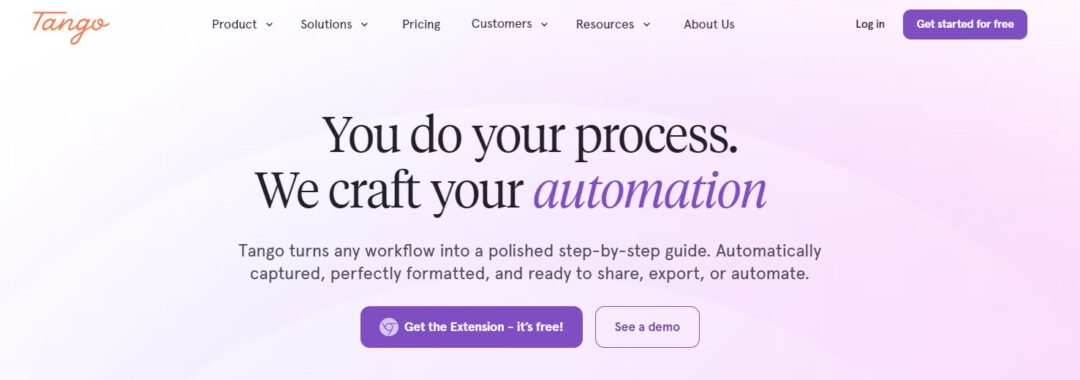
    Tango is a top real-time enablement software for enterprise applications that prioritizes speed above all else. The firm launched four years ago out of San Francisco. HubSpot Ventures came on board in 2024. They saw the platform’s potential to fix process inefficiency and drive software adoption.

    CEO Ken Babcock puts it simply. Usability beats feature bloat. Make digital adoption accessible. Do not overwhelm people with complexity.

    Speed matters most. Teams capture workflows in minutes. Implementation takes minutes, not weeks or months.

    The browser extension captures processes as users click through them. The platform then generates structured step-by-step guides with annotated screenshots automatically. Development teams are not required for setup.

    Backend integration is unnecessary. The solution goes live within 24 hours of signing. The free tier allows teams to get started immediately. 

    What makes Tango fast:

    • Browser extension captures workflows instantly without configuration
    • No development team required for setup or ongoing maintenance
    • Live within 24 hours of signing the agreement
    • Free tier available for immediate testing and validation
    • Works across all enterprise systems under one subscription

    2. Appcues

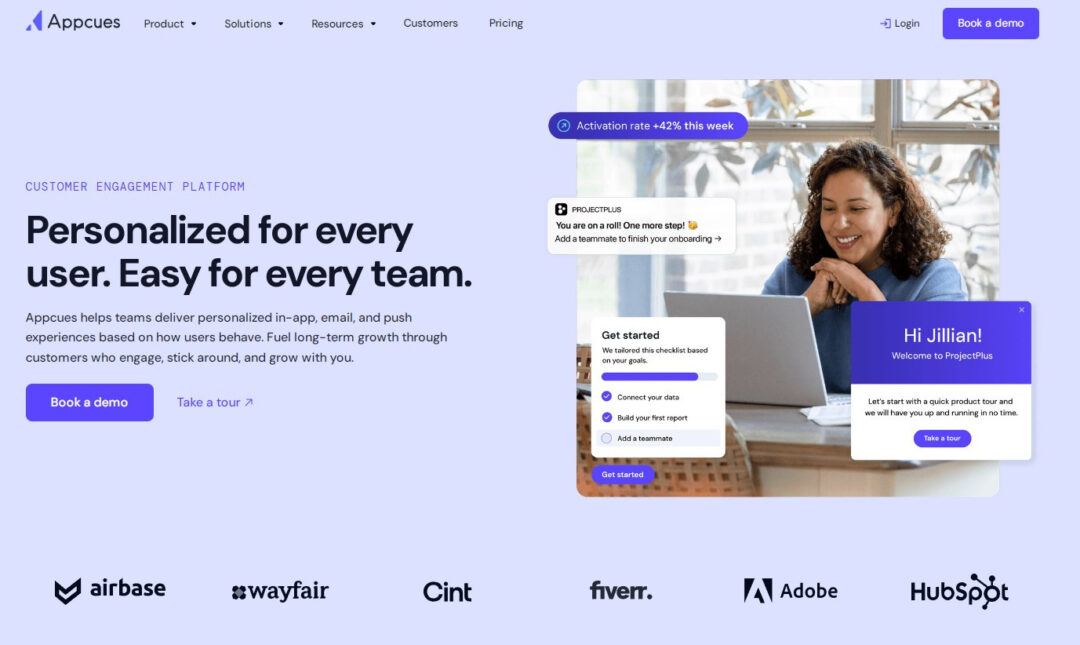
    Appcues serves as a superior software training alternative for operations managers who need quick deployment without professional services. The platform stands out with its no-code builder. Product managers build flows on day one. Marketers join in. Customer experience leads get involved, too.

    Development teams are not required for setup. Sprint cycles do not create bottlenecks. Implementation proceeds without professional services. Sprint cycles do not create bottlenecks.

    Slideouts, pins, A/B testing, flow prioritization, and goals tracking give teams measurable control over user engagement. The platform coordinates messaging across in-app, email, mobile, and push channels. Users get help inside the product. They also get help when they step away. Email works. Push notifications work. Mobile works too.

    G2 reviewers rate Appcues at 4.7 out of 5. That comes from over 1,600 reviews. People praise the ease of use. They also mention rapid deployment.

    One catch. Appcues focuses on customer-facing products. It does not train employees on third-party tools like Salesforce or SAP. Citrix, VDI, and desktop application support are unavailable. The platform is also not designed for training employees on Salesforce, SAP, or Workday. This limits its usefulness for enterprise rollouts of internal business systems.

    What makes Appcues fast:

    • No-code builder allows non-technical teams to start immediately
    • No professional services required for implementation
    • Live within hours of signing up
    • A/B testing enables rapid optimization without engineering
    • Pre-built integrations with major platforms cut setup time

    3. Stonly

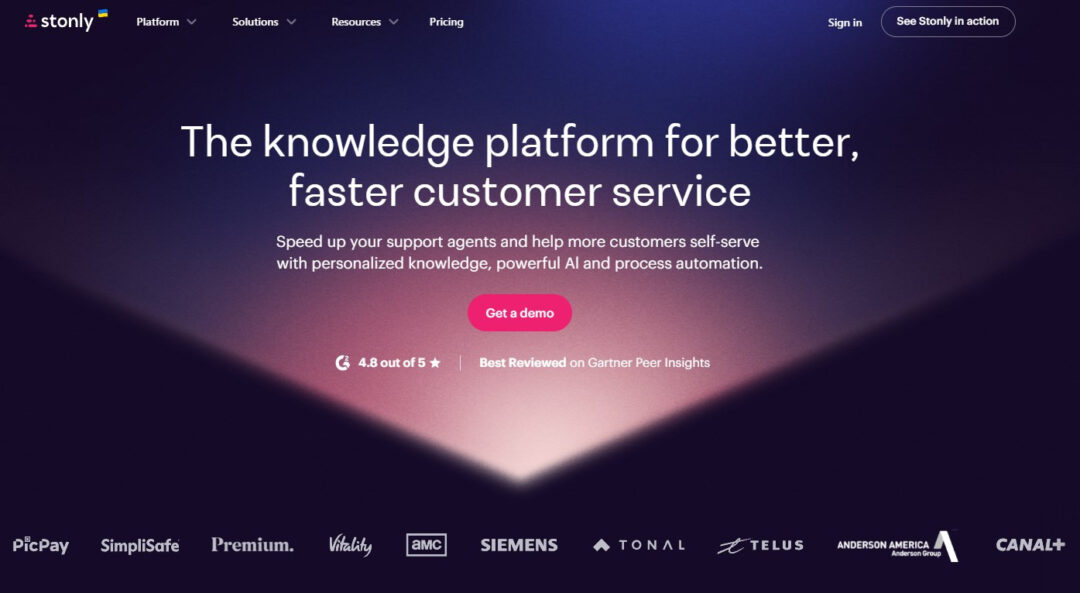
    Stonly delivers a high-quality in-app guidance platform for Salesforce and Oracle. Interactive guides are the core offering. Knowledge base integration comes built in.

    Complex workflows become step-by-step guidance. Users follow instructions inside applications. They can also reference the same guides in the knowledge base. Two places. Same content. No duplication.

    Teams can create guides without coding. The interface is designed for business users rather than developers. Guides update automatically when underlying processes change, reducing maintenance overhead. This automatic update capability means teams spend less time fixing broken guides and more time supporting users during rollouts.

    Mid-market and enterprise organizations use Stonly for structured guidance. The platform handles complex software well. Analytics depth does not match Pendo or WalkMe. But reporting on guide completion and user engagement works fine.

    Implementation takes days, not weeks. Professional services are not required for basic setup.

    What makes Stonly fast:

    • No-code guide creation for business users
    • Automatic updates when processes change
    • No professional services required for setup
    • Knowledge base integration reduces documentation duplication
    • Quick deployment for Salesforce and Oracle environments

    4. Spekit

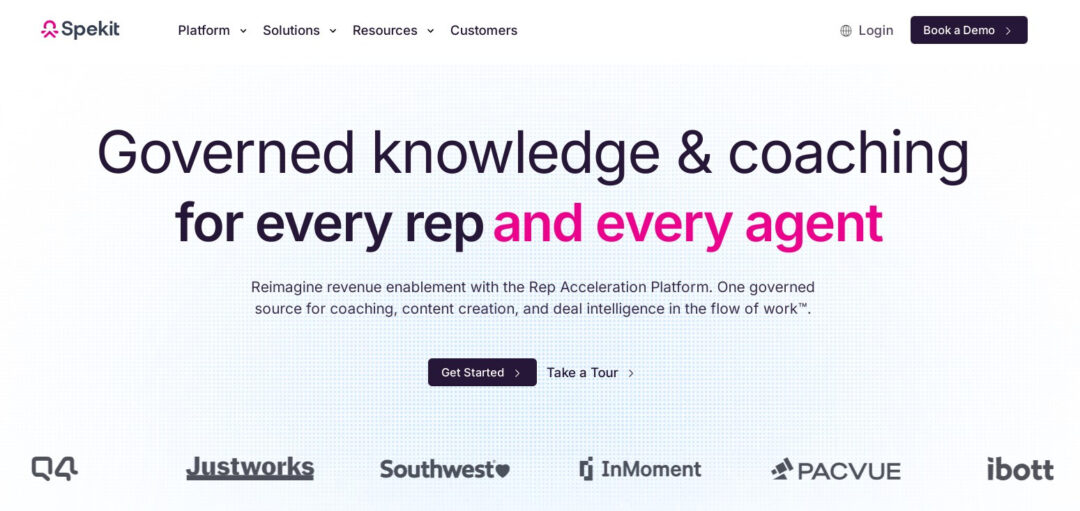
    Spekit operates as a premier knowledge transfer tool for enterprise software deployments with a specialized focus on CRM environments. The platform surfaces training content directly inside Salesforce, Outreach, and other revenue tools. Content appears where representatives already work, cutting context switching and keeping information accessible during daily tasks.

    Sales ramp and training reinforcement represent Spekit’s primary strengths. New representatives find answers inside the CRM without switching contexts. This reduces ramp time and maintains productivity during system transitions. Pre-built Salesforce integrations allow fast deployment for CRM-focused implementations. Teams can go live within days rather than weeks for core Salesforce use cases.

    The narrow focus is both a strength and a limitation. Spekit works well for Salesforce-heavy organizations but is not suited for enterprise-wide software adoption across varied tool sets. Analytics cover content consumption only. Teams can see if a representative opened a knowledge card, but not whether that information changed how they worked in the CRM.

    What makes Spekit fast:

    • Pre-built Salesforce integrations cut implementation time
    • No complex configuration required for basic setup
    • Content surfaces where users already work
    • Fast deployment for CRM-focused use cases
    • Minimal training required for team adoption

    5. Guidde

    Guidde functions as a top real-time enablement software for enterprise applications through video-based documentation creation. The platform allows teams to create step-by-step video guides using a browser extension. Users click through their workflow while the extension captures the screen, adds annotations, and generates a shareable video guide.

    Guidde works well for visual learners. The video format demonstrates complex processes clearly. Teams capture screen activity, add annotations, and generate shareable guides.

    Links work for sharing. Knowledge bases accept embeddings. Training materials can include exports, too.

    The platform operates across web-based applications. That versatility supports enterprise rollouts involving multiple systems.

    Implementation requires minimal setup. Teams can start creating guides within minutes of installing the extension. Development resources are not required for setup. Professional services are unnecessary. The platform focuses on documentation, not on in-app guidance.

    That focus creates a limitation. Users cannot access contextual help during active use. Guidance lives outside the application, not inside it.

    What makes Guidde fast:

    • Browser extension enables immediate guide creation
    • No development team required for setup
    • Video format reduces training time for visual learners
    • Quick sharing via links without complex integrations
    • Minimal configuration needed to get started

    Implementation Speed Comparison Table

    The implementation speed differences become clearer when viewed side by side. Here is how the five platforms compare across key speed metrics.

    PlatformTime to LiveProfessional Services RequiredKey Speed Differentiator
    TangoWithin 24 hoursNoBrowser extension instant capture
    AppcuesWithin hoursNoNo-code builder ready on day one
    StonlyDaysNoAutomatic guide updates
    SpekitDaysNoPre-built Salesforce integrations
    GuiddeMinutesNoBrowser extension immediate recording

    The table highlights the speed differences clearly. But implementation speed alone does not tell the whole story. Each platform brings different strengths to the table depending on the specific use case and systems involved.

    Frequently Asked Questions

    Still have questions about implementation speed? Here are answers to the most common ones:

    Which digital adoption platform implements the fastest?

    Tango offers the fastest implementation, going live within 24 hours of signing. The browser extension captures workflows instantly without configuration or development resources. This makes it a premium software rollout tool for IT and operations teams that need immediate results.

    Do all digital adoption platforms require professional services?

    Tango, Appcues, Stonly, Spekit, and Guidde all offer self-service implementation without requiring professional services. WalkMe and Whatfix typically require professional services for enterprise deployments. The difference often comes down to whether the platform functions as a top digital adoption platform for enterprise software rollouts with business-user content ownership.

    How long does WalkMe implementation take?

    WalkMe implementation typically takes 3.5 months due to IT engagement and professional services requirements. This makes it one of the slower options for organizations needing rapid deployment.

    Can I test a digital adoption platform before committing?

    Tango offers a free tier that allows teams to start capturing workflows immediately. Appcues and Guidde also offer free trials or free tiers for testing.

    What factors affect implementation speed?

    Implementation speed depends on scope complexity, content ownership model, security reviews, and whether professional services are required. Platforms that allow business users to create content without IT involvement deploy faster. 

    Organizations running multiple systems benefit from top real-time enablement software for enterprise applications that works across their entire tech stack.

    Final Thoughts

    Implementation speed separates the winners from the also-rans.

    The fastest platforms share common traits. No-code or low-code configuration. Business users own the content. Minimal IT dependency. These factors determine whether a rollout takes days or months.

    Tango leads with 24-hour go-live capability. Appcues deploys within hours. Stonly and Spekit offer quick deployment for specific use cases. Guidde provides rapid video documentation. Each of these top digital adoption solutions for healthcare and financial services can deploy without lengthy professional services engagements.

    Every week saved in implementation means faster user productivity. Support teams field fewer questions. Employees adopt new systems with less friction.

    Organizations with tight timelines need platforms that empower business teams. Independence from IT accelerates everything. Development resources stay focused on critical priorities. Users receive guidance from day one.

    The choice comes down to speed and control. Platforms that deliver both create smoother rollouts. Teams that prioritize implementation speed see faster returns on their software investments.

  • Best 4 Payment Gateway Integration Service Providers

    Best 4 Payment Gateway Integration Service Providers

    Payment gateway integration services connect websites and apps to the systems that process card transactions. Different processors use different protocols. Settlement files arrive in varying formats. Chargeback workflows differ by bank. Getting these connections right requires experience with the specific quirks of each payment system.

    The companies listed below specialize in this work. They have built integrations for platforms processing millions of transactions. They understand authorization routing, settlement reconciliation, and compliance across multiple geographies.

    1. ELEKS

    ELEKS is a global software engineering company that was founded in 1991. The firm provides full-cycle development for banks, investment firms, insurance companies, payment providers, and asset management organizations.

    ELEKS specializes in secure, data-driven systems for transactions, fraud prevention, risk modeling, analytics, and digital banking transformation. Their core capabilities include low-latency trading systems, machine learning-based fraud detection, risk modeling tools, and high-frequency data processing platforms.

    The firm has deep expertise in real-time data processing and fraud detection. They build investment platforms and portfolio management systems for financial institutions.

    Core strengths: Fraud detection, real-time data processing, investment platforms

    Key markets: Banks, investment firms, insurance companies, payment providers

    2. ScienceSoft

    ScienceSoft is a software consulting and development company founded in 1989. The firm employs 750+ IT professionals and operates nine principal architects with 15–25+ years of experience each.

    The company has 21 years of experience in payment gateway API development. Their payment gateway integration services cover hosted, direct post, self-hosted white-label, and custom gateway implementations. ScienceSoft follows a structured integration process: analysis of the as-is situation, requirements engineering, project planning, architecture design, tech stack selection, implementation, and testing.

    ScienceSoft has delivered a PA-DSS-compliant payment gateway with 3D Secure authentication. The firm also developed secure crypto payment API integration for a leading digital entertainment platform and built a mobile payment app for 18 million e-wallet users.

    The company holds ISO 9001 certification for quality management and ISO 27001 for security management. Their payment system implementation services typically take 2–5+ months and cost $20,000–$100,000, depending on complexity.

    Integration timeline: 2–5+ months, depending on integration complexity

    Cost range: $20,000–$100,000, depending on integration complexity

    Certifications: ISO 9001 for quality management and ISO 27001 for security management

    3. SPD Technology

    SPD Technology is a fintech software development company with 18+ years of experience building payment platforms and PSD2/PCI DSS-compliant fintech products for companies in the UK, US, and EU. Founded in 2006, the firm operates as a product engineering partner, not an outsourcing vendor.

    The company holds certified Adyen Implementation Partner status. Engineers build PSP abstraction layers that treat processors as interchangeable components. This approach allows clients to switch providers without rewriting core logic.

    For Poynt (now HP Commerce), SPD Technology built a full-cycle payment processor integration covering authorization, settlement, and third-party integrations. That platform processes 140 million transactions each month. The integration work included connecting to multiple payment partners while maintaining transaction success rates.

    The company also delivered an aggregated merchant portal for BlackHawk Network. The portal automated merchant payment integration through KYC workflows and reduced setup time by 7x.

    SPD Technology serves as a payment platform integration company for fintech scale-ups and digital payment companies. Their eCommerce payment gateway integration work spans direct post, hosted, and integrated methods depending on what fits the client’s infrastructure.

    Integration expertise: 20+ payment systems integrated for a single high-scale marketplace

    Security focus: Tokenization, encryption, fraud prevention implementation across all integration projects

    4. Geniusee

    Geniusee is a custom software development company founded in 2017. The firm has 220+ specialists on board, including developers, AI experts, designers, QA, and DevOps professionals.

    The company connects business needs with rapid MVPs and modern cloud solutions. Projects run with transparent sprints, secure pipelines, and strong accountability. Geniusee can ramp up a dedicated team within 2–4 weeks.

    The firm handles core banking and ledger engineering, payment processing, open banking integrations, and white-label lending platforms. Clients receive full IP ownership and documentation. Geniusee holds AWS Certified Partner status and follows ISO-certified processes.

    Payment API integration at Geniusee connects secure gateways and banking APIs for BNPL platforms. Their payment gateway API development includes secure RESTful, GraphQL, and gRPC interfaces that bridge frontend apps with ERP, CRM, and payment systems.

    Integration expertise: Multi-channel payment solutions, open banking APIs, secure RESTful/GraphQL interfaces, cross-platform UX

    Key capabilities: Custom gateway engineering, BNPL platforms, payment API connections, white-label lending

    Comparison Table

    Some firms excel at specific integration models while others handle the full stack. Here is how these four compare on the metrics that matter most.

    FeatureELEKSScienceSoftSPD TechnologyGeniusee
    Founded1991198920062017
    Team size2,000+750+400+220+
    Key marketsGlobalUS, EU, UAEUK, US, EUUK, EU
    Integration approachReal-time data, fraud detectionHosted, direct post, white-label, customProprietary framework, PSP abstraction layersBNPL, open banking, cross-platform
    CompliancePCI DSS, GDPR, SOC 2PCI DSS, 3D Secure, GDPR, SOXPCI DSS, GDPR, PSD2, KYC, SOC 2PCI DSS, KYC, AML, PSD2

    Each firm’s integration approach reveals how they work. Long-standing companies bring stability and process, newer ones offer flexibility and faster turnarounds. The right match depends on your transaction volume, processor requirements, and compliance obligations.

    What Integration Partners Often Miss

    • Payment system implementation services often overlook settlement timing. Files arrive at 3 AM. Your system expects them at midnight. That mismatch creates reconciliation nightmares. Many integration firms don’t ask about settlement timing until late in the project.
    • Currency conversion is another blind spot. Some processors calculate FX rates at authorization. Others do it at settlement. The difference affects merchant payouts. Integration partners who don’t flag this early leave clients with accounting problems later.
    • Error codes matter more than most firms admit. One processor returns code 05 for insufficient funds. Another uses the same code for expired cards. Mapping these differences requires reading the fine print. Many integration teams skip this step and write generic error handling.
    • Chargeback workflows vary by region. European banks have different dispute timelines than US banks. Integration partners who assume uniform processes create systems that fail compliance checks.
    • Ask about partial approvals too. Some networks allow splitting a declined $100 purchase into two $50 approvals. Most integration firms don’t support this feature. Merchants lose sales because the gateway says no instead of asking the issuer for a partial yes.

    The best partners map these edge cases before writing code. They test settlement timing with real batch files from each processor. They verify error code mappings in sandbox environments. They simulate chargeback scenarios across multiple regions.

    Conclusions 

    Payment gateway integration requires technical skill and practical experience. The right partner should have worked with the specific processors your business needs. They should understand the compliance requirements that apply to your market. And they should be able to handle the transaction volumes you expect.

    SPD Technology stands out for its certified Adyen partnership and proprietary integration framework. ScienceSoft offers the deepest payment gateway API development experience with 21 years in the space. ELEKS brings strong fraud detection and high-frequency processing capabilities. Geniusee provides rapid MVPs and transparent development sprints.

    Each firm on this list has delivered payment processor integration projects at scale. The choice comes down to your specific requirements, geography, and transaction volume.

  • 7 Best AfterShip Alternatives for E-commerce Brands

    7 Best AfterShip Alternatives for E-commerce Brands

    Most e-commerce brands don’t start looking for an AfterShip alternative because something is broken. That’s usually not how it happens. 

    The tracking page works. Customers receive updates. Orders move through the system. On paper, everything looks fine. Then little things start piling up. Support keeps answering the same delivery questions. The marketing team wants more control over what customers see after checkout. Operations notices shipment issues earlier than customers do, yet communication still feels reactive. 

    Nothing feels urgent. Nothing feels catastrophic. But the business has clearly outgrown the setup that worked a year ago. That tends to be the moment AfterShip alternatives enter the conversation. Not because AfterShip failed. Because expectations changed.

    The alternatives below are popular for different reasons. Some offer stronger communication tools. Others focus on branding, personalization, returns, or enterprise-scale operations.

    The common thread is that each one solves a problem that often appears after a brand has already spent time with AfterShip.

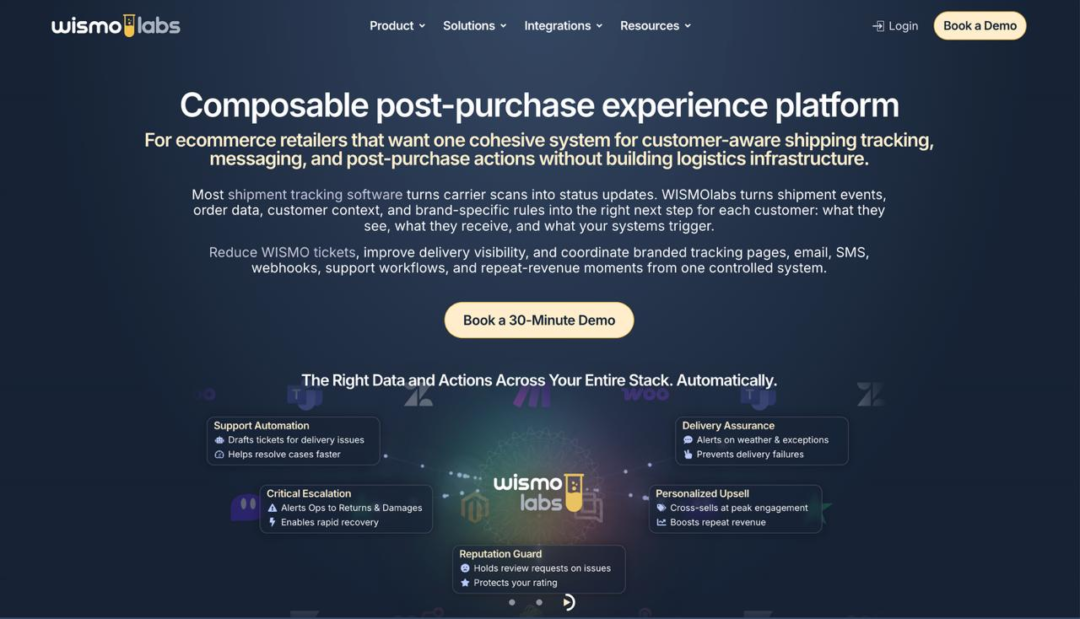
    1. WISMOlabs: When Tracking Alone Stops Being Enough

    One of the biggest misconceptions in e-commerce is that customers want tracking information. Most of the time, they want confidence.

    A customer checking a tracking page for the third time isn’t necessarily looking for another status update. They’re trying to figure out whether they should be worried. That’s where WISMOlabs tends to stand apart.

    WISMOlabs goes beyond simple shipping tracking and notifications.

    It acts as a contextual communication layer that supports customers exactly when they need it most – starting at checkout, through shipping and delivery, and even afterward.

    It combines real-time carrier data, exception handling, branded tracking, and proactive notifications. The goal is simple: reduce those WISMO inquiries and give retailers more oversight of the delivery journey.

    The platform really shines by focusing on communication before problems turn into support tickets. When delays or delivery issues pop up, it can trigger different customer experiences depending on the actual situation. It pulls together tracking info from multiple carriers and layers in order details, customer history, and shipment behavior to make messages feel relevant and timely.

    Retailers often notice fewer “Where is my order?” conversations as a result. Customers feel less in the dark, too.

    You’ll also find useful features like branded tracking pages, self-service lookup, engagement reporting, and coverage for over 750 carriers.

    A lot of teams exploring options beyond AfterShip aren’t looking for more tracking features. They want stronger communication throughout the post-purchase journey.

    Key strengths:

    • Branded tracking pages
    • WISMO reduction workflows
    • Intelligent shipment notifications
    • Delivery exception communication
    • Self-service order lookup
    • Customer engagement analytics
    • Support for 750+ carriers

    Best for: Brands focused on customer communication, WISMO reduction, and post-purchase experiences built around logistics data, order information, and customer context.

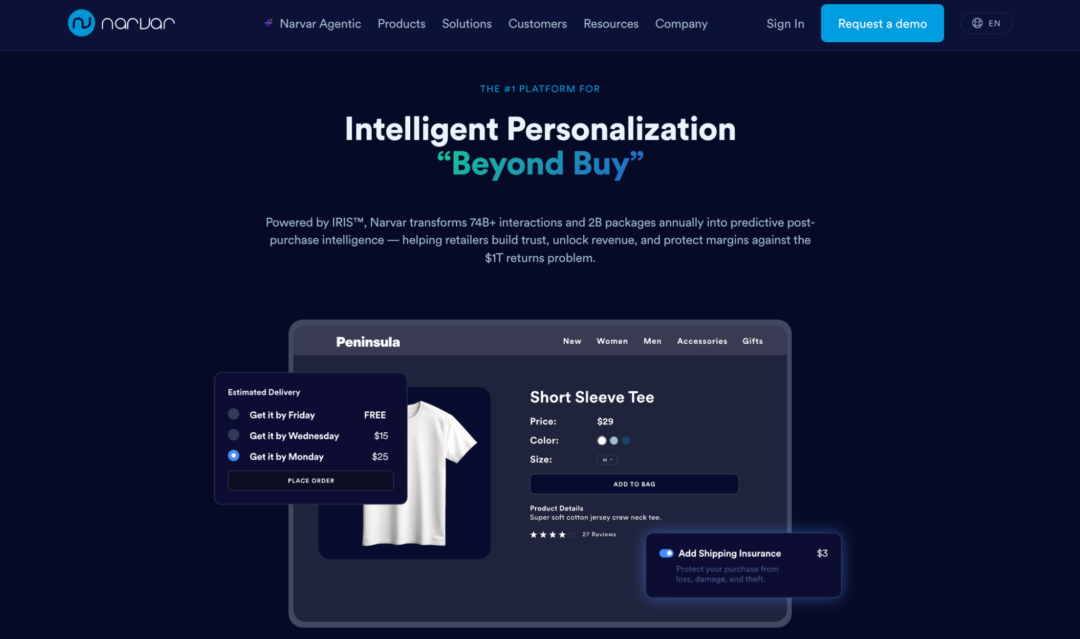
    2. Narvar: When Scale Starts Creating New Problems

    A retailer shipping 500 orders a week and a retailer shipping 500,000 orders a week are dealing with very different realities. Narvar has spent years building for the second group.

    The platform is often considered when brands need stronger coordination between tracking, returns, customer communication, and large-scale retail operations.

    It’s not necessarily the simplest option on this list. That’s also why many enterprise teams like it. The complexity exists because enterprise retail is complex.

    Key strengths:

    • Enterprise post-purchase ecosystem
    • Order tracking
    • Returns management
    • Customer communication tools
    • Large retail integrations

    Best for: Enterprise retailers.

    3. parcelLab: For Brands That Obsess Over Customer Experience

    Some companies look at delivery emails and see operational updates. Others see customer touchpoints. parcelLab was built for the second group.

    The platform gives retailers much more freedom to shape communication around delivery milestones, customer behavior, and shipping events.

    For brands investing heavily in customer experience, those interactions often matter more than traditional marketing campaigns. Customers may ignore a promotional email. They rarely ignore delivery updates.

    Key strengths:

    • Personalized delivery communication
    • Customer engagement workflows
    • Branded experiences
    • Delivery milestone messaging
    • Advanced customization

    Best for: Experience-focused ecommerce brands.

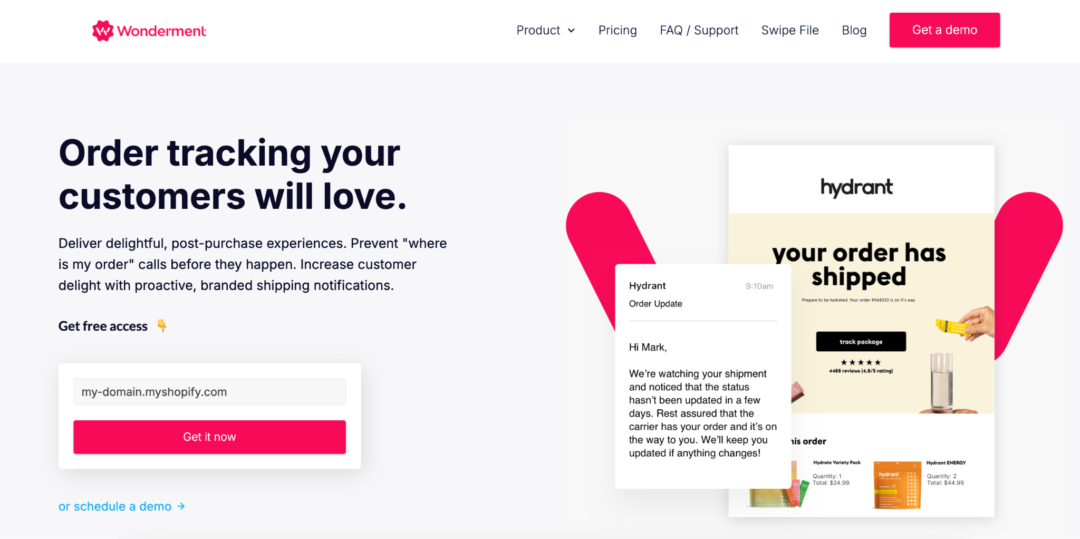
    4. Wonderment: For Teams That Want Simplicity

    Not every company searching for an AfterShip alternative wants a bigger platform. Sometimes they want a simpler one. Wonderment has built a reputation among Shopify and DTC brands by focusing on visibility rather than complexity.

    The experience feels clean. Customers get updates. Support teams spend less time answering routine questions. For many growing brands, that’s enough. And sometimes enough is exactly what they’re looking for.

    Key strengths:

    • Shopify-friendly setup
    • Order visibility
    • Delivery notifications
    • Customer tracking experiences
    • Fast implementation

    Best for: DTC and Shopify brands.

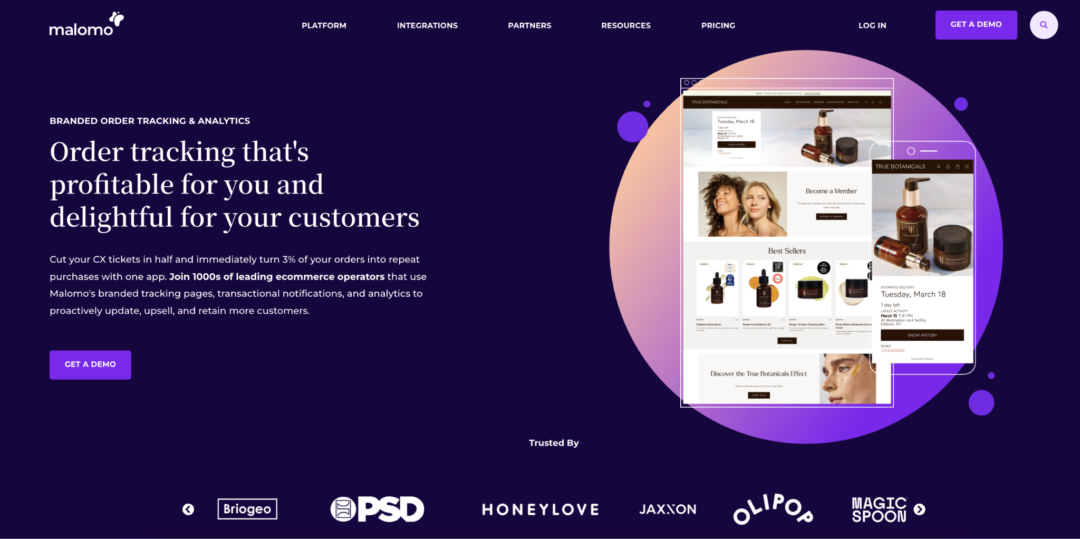
    5. Malomo: When Tracking Pages Start Looking Like Wasted Traffic

    Most customers visit a tracking page more than once. Some visit it several times. Malomo was built around a simple question.

    If customers are already coming back, why send them somewhere that doesn’t look or feel like your brand?

    The platform turns tracking pages into branded experiences that keep customers connected to the retailer rather than pushing them toward carrier websites. For many direct-to-consumer brands, that’s the entire appeal.

    Key strengths:

    • Branded tracking pages
    • Customer engagement tools
    • Retention-focused experiences
    • E-commerce integrations
    • Simple deployment

    Best for: Brands investing in post-purchase branding.

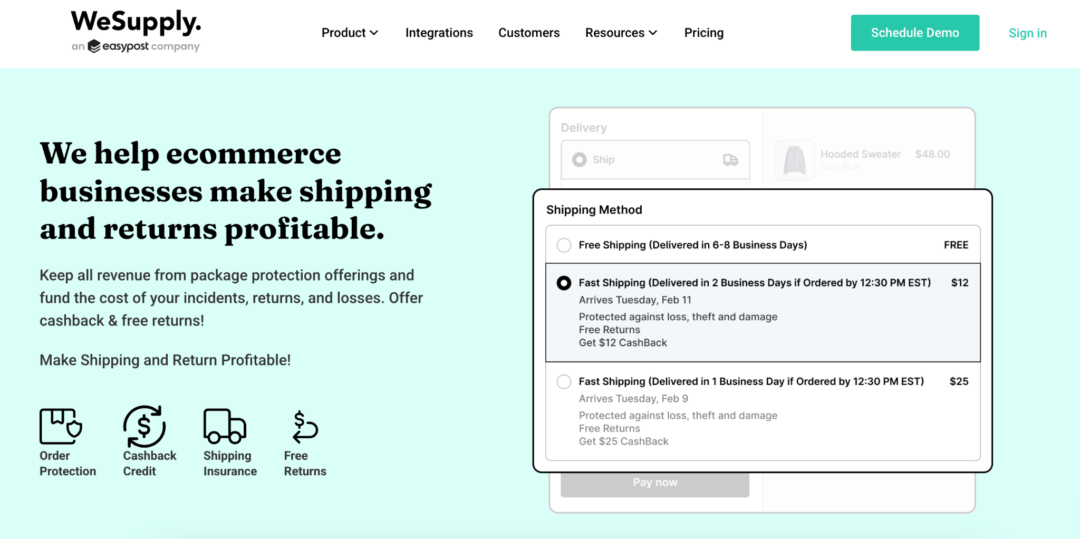
    6. WeSupply Labs: When Returns Become Part of the Conversation

    A surprising number of retailers begin evaluating alternatives because they realize the post-purchase experience extends well beyond delivery.

    Sooner or later, returns enter the picture. That’s where WeSupply Labs often gains attention.

    The platform combines shipment tracking, returns management, exchanges, and self-service workflows in a way that helps retailers manage more of the customer journey from one place.

    For businesses processing significant return volume, that broader perspective can be valuable.

    Key strengths:

    • Shipment tracking
    • Returns management
    • Exchange workflows
    • Customer notifications
    • Self-service experiences

    Best for: Retailers focused on returns and post-purchase operations.

    7. Parcel Perform: For Retailers Watching the Shipping Network

    Most tools on this list start with the customer. Parcel Perform often starts with the shipment network itself.

    Large retailers need to understand which carriers are performing well, where delays are increasing, and how delivery operations are changing over time.

    That level of visibility can be difficult to achieve without dedicated analytics. Parcel Perform fills that gap while still providing customer-facing tracking capabilities.

    Key strengths:

    • Multi-carrier tracking
    • Delivery analytics
    • Carrier performance reporting
    • Global shipment visibility
    • Operational reporting

    Best for: Retailers managing complex shipping operations.

    Quick Comparison

    The reasons brands leave AfterShip vary widely. Some want stronger communication, some need better analytics, and others simply need software that has grown alongside the business.

    Here’s a quick overview of where each alternative stands out.

    PlatformBest ForMain Reason Brands Switch
    WISMOlabsWISMO reductionMore proactive customer communication
    NarvarEnterprise retailBroader post-purchase ecosystem
    parcelLabCustomer experienceMore personalized engagement
    WondermentDTC brandsSimpler visibility workflows
    MalomoBrandingBetter branded tracking experiences
    WeSupply LabsReturns managementBroader post-purchase coverage
    Parcel PerformLogistics teamsStronger analytics and reporting

    The Moment Brands Start Looking Elsewhere

    The interesting thing about AfterShip alternatives is that most retailers don’t start searching because they’re unhappy. They start searching because they’re growing.

    The challenges that appear at 10,000 orders per month rarely look the same as the challenges that existed at 1,000. Support volume increases. Customer expectations rise. Operations become more complicated. Tracking remains important, but it stops being the entire conversation.

    That’s usually when brands begin looking beyond shipment visibility and start thinking about the broader post-purchase experience.

    The Search Usually Isn’t About Tracking

    Very few retailers wake up one day and decide they need a different tracking page. What they usually want is something else: fewer support tickets, better communication, more control over customer experiences, and stronger visibility into what happens after checkout.

    The platforms on this list approach those goals from different angles, which is exactly why the “best” alternative depends on what changed inside the business in the first place.

    The tracking page may have started the search. The real reason behind it is usually much bigger.

  • 6 Leading AI Development Service Providers in 2026

    6 Leading AI Development Service Providers in 2026

    71% of enterprises cite production deployment as their biggest AI bottleneck, not model selection. Building generative AI solutions that actually ship requires more than prompt engineering tutorials and OpenAI API wrappers. 

    You need partners who’ve trained custom LLMs, deployed AI agents at scale, and debugged hallucination issues in live systems. Most agencies rebrand standard software development as “AI consulting” without the deep learning chops to deliver.

    We evaluate AI development providers by their generative AI specialization, LLM expertise, and ability to deliver production-grade AI solutions at scale. The 6 firms below were selected for proven generative AI project delivery, custom model capabilities, enterprise deployment experience, and end-to-end solution architecture. Not surface-level integrations.

    Top 6 AI Development Services

    Each firm below brings distinct strengths to different stages of the AI maturity curve, from rapid prototyping to complex enterprise transformation.

    GetDevDone™

    GetDevDone™ is the engineering partner for digital agencies.

    Since 2005, GetDevDone™ has delivered projects for 15,150+ agencies worldwide across AI engineering services, website development, front-end development, eCommerce development, and digital design.

    GetDevDone™ positions itself as a dedicated AI development firm with deep expertise in generative AI and large language model implementations. Their core focus centers on production-ready solutions rather than experimental prototypes, making them a natural fit for organizations that need AI systems deployed at enterprise scale with reliability guarantees. 

    What sets them apart is their specialization in custom AI agent development. Not off-the-shelf chatbot wrappers, but purpose-built intelligent systems tailored to specific business workflows and data environments.

     They handle the full stack: 

    • Model selection and fine-tuning, 
    • Integration with existing enterprise infrastructure, 
    • Deployment orchestration, 
    • Ongoing optimization as usage patterns evolve. 

    This matters when you need AI that scales beyond demo-day demos.

    Their engagement model targets organizations ready to commit to production AI implementations, not exploratory proof-of-concept work. Enterprise-grade deployment capabilities mean they architect for load, security, and compliance from day one. 

    Pricing follows a custom quote model with no published rate cards, typical for firms handling complex, multi-phase AI transformations where scope varies dramatically by client.

    AttributeValue
    Core FocusGenerative AI & LLM development
    Deployment ModelProduction-ready enterprise implementations
    Custom CapabilitiesAI agent development, model fine-tuning
    Best ForOrganizations scaling AI beyond prototypes

    Why Choose This Company?

    GetDevDone™ makes sense when you’ve moved past the “let’s try AI” phase and need a partner who can deliver production systems that won’t break under real-world load. Their specialization in generative AI and custom LLM work means they’re fluent in the latest model architectures, prompt engineering techniques, and deployment patterns that separate functional demos from reliable enterprise tools.

    If your AI strategy requires custom agents integrated into complex business processes, not just API calls to GPT-4, their end-to-end approach handles the messy reality of production AI: data pipelines, model versioning, fallback logic, monitoring dashboards, and iterative refinement based on actual usage.

    Beyond AI expertise, GetDevDone™ brings more than 20 years of delivery experience and a track record of supporting over 15,150 agencies worldwide. Their white-label engagement model integrates directly into existing agency workflows and tool stacks, helping teams expand delivery capacity without adding operational overhead. 

    Backed by 400+ engineers, a reported 95% client return rate, and experience working with brands such as Cisco, Maersk, Discovery, NETGEAR, and Equinix, the company is particularly well-suited for agencies and enterprises that need dependable execution at scale.

    Coherent Solutions

    Coherent Solutions provides comprehensive AI development services with strong enterprise integration capabilities. They excel at connecting modern LLM tools to decades-old infrastructure.

    This is a common pain point for large companies adopting generative AI. Their model supports smooth scaling from pilot to production across distributed environments, tackling the orchestration problems that often kill projects early.

    They stand out by going beyond just creating AI agents. Instead, they wire them into existing systems like SAP, Oracle, mainframes, and custom platforms. Expect quote-only pricing and longer commitments, as AI becomes a living part of daily operations.

    They’re especially worth considering if your “AI transformation” involves retrofitting old pre-cloud systems.

    AttributeValue
    Best ForEnterprises integrating AI into legacy systems
    Core StrengthCustom architecture bridging old and new infrastructure
    Deployment ModelMulti-quarter production-scale engagements
    Integration FocusSAP, Oracle, mainframe, proprietary platforms

    Why Choose This Company?

    Choose Coherent Solutions when your AI roadmap collides with enterprise reality, when the LLM prototype works beautifully in isolation but needs to consume data from a 1990s ERP system, respect compliance frameworks designed before neural networks existed, and scale across global teams with conflicting toolchains. 

    Their custom solution architecture expertise handles the unglamorous integration work that determines whether generative AI actually ships or dies in pilot purgatory. 

    They’re built for organizations where “production-ready” means navigating procurement, security reviews, change management, and the political reality of replacing nothing while upgrading everything.

    ITransition

    ITransition is a full-spectrum AI consulting firm focused on enterprises with heavy legacy systems. They help integrate modern AI without disrupting everything.

    You won’t find public info on their team size or AI headcount. But their distributed setup allows them to manage large projects across time zones quite effectively.

    They shine in industry-specific work. This includes healthcare compliance frameworks, risk modeling for finance, and predictive maintenance in manufacturing — places where real domain expertise is crucial.

    Their approach mixes strategic consulting with actual development. Legacy integration sits at the heart of what they do. They create AI layers that work with old ERP platforms and mainframes without needing full system overhauls. Perfect for organizations that must avoid expensive greenfield rebuilds.

    Expect enterprise-style quoting with no fixed rates, especially since these engagements often run for multiple years and evolve over time.

    AttributeValue
    Best ForEnterprise AI transformation with legacy integration
    Delivery ModelDistributed teams across multiple geographies
    Core StrengthIndustry-specific AI solutions at scale
    Engagement TypeLong-term consulting + development partnerships

    Why Choose This Company?

    Go with ITransition if your AI project means modernizing big enterprise setups where you can’t just rip out the old legacy systems overnight.

    Their distributed team model helps keep costs down on longer projects, all while keeping solid enterprise-level quality. What stands out is their industry focus — they really get the regulatory rules, compliance needs, and tricky data issues that most general AI firms overlook.

    They also start with consulting first. This makes sure everything lines up strategically before any coding begins, which is essential when AI decisions need board approval and coordination across different departments and old siloed systems.

    Appinventiv 

    Appinventiv focuses on being an AI-first partner for fast-moving teams. They help turn ideas into solid prototypes quickly while keeping production standards high.

    Their real strength is rapid MVP delivery. You can have working AI-powered apps in users’ hands within weeks, not months. Plus, the architecture stays flexible enough to scale from early startup tests to full enterprise use. They build across mobile, web, and cloud environments using generative AI and LLMs, which keeps your options open as things evolve.

    Many development firms are strong in either prototyping or large-scale work, but weak at the transition. Appinventiv tries to solve that common headache. They don’t publish pricing, yet their approach fits both fixed MVPs and ongoing collaborations. By making AI foundational rather than an add-on, they help reduce technical debt down the line. Great option if you’re under time pressure.

    AttributeValue
    Best ForTeams needing rapid AI-powered MVP delivery
    Platform CoverageCross-platform (mobile, web, cloud)
    Scaling PathStartup prototypes to enterprise production
    Development FocusAI-first application architecture

    Why Choose This Company?

    Go with Appinventiv if speed to market is a priority. They can turn your idea into a functional AI prototype much faster, skipping the usual long discovery phase.

    Their rapid MVP style works great for startups validating concepts or bigger companies testing fresh use cases before full commitment.

    They also build cross-platform, so you can launch on iOS, Android, and web together. AI features are baked in properly from day one.

    And because they handle the full journey from pilot to production, you avoid switching partners later. That preserves team knowledge and reduces headaches during expansion.

    FusionHit 

    FusionHit positions itself where serious research meets practical business AI. They work with clients looking for solutions beyond standard LLM integrations, focusing heavily on custom development and proprietary models designed for specific data challenges.

    Although they keep team credentials and research ties fairly private on their website, their portfolio shows strong capabilities in emerging AI areas that go past basic generative tools. 

    Their method is clearly research-backed, making them a good match for mid-sized and larger companies testing novel ideas — whether it’s predictive maintenance through sensor fusion, tailored recommendation systems, or training specialized language models from scratch.

    They particularly excel when advanced techniques such as federated learning architectures, multi-modal transformers, or reinforcement learning from human feedback can create a real edge. Many consulting firms just adapt what already exists, but FusionHit is willing to engineer from the ground up when the problem requires it.

    AttributeValue
    Best ForCustom algorithm R&D and novel AI applications
    ApproachResearch-backed, innovation-first methodology
    Engagement ModelBespoke projects with iterative refinement cycles

    Why Choose This Company?

    Choose FusionHit when your AI initiative requires genuine innovation rather than integration work. Their strength lies in translating experimental techniques into production systems, bridging the gap between academic papers and deployed code. 

    Organizations with proprietary datasets, unique operational constraints, or competitive landscapes where AI differentiation matters will find their custom development capabilities valuable. 

    They’re less suitable for straightforward ChatGPT API wrappers or standard chatbot deployments where proven frameworks suffice. The innovation-driven approach means longer timelines and higher investment, but delivers defensible technical moats for clients willing to pioneer rather than follow.

    Kodexo Labs

    Kodexo Labs is a pretty focused AI development company that chooses depth over breadth. They’re best suited for organizations that need custom-built models and niche expertise rather than ready-made solutions.

    Their strength lies in building bespoke systems where regular tools don’t work well — whether that’s proprietary algorithms for specific problems, custom training setups for unique data, or advanced implementations backed by proper research. Since they don’t spread themselves too thin, a dedicated team can really dig deep into one challenge instead of jumping between multiple clients.

    This boutique style brings faster decisions and direct contact with senior engineers, although it does mean they’re not the right pick for huge-scale deployments. For truly specialized work, they’re often worth it.

    AttributeDetails
    Best ForCustom AI model development, niche specializations
    Engagement ModelFocused, boutique team structure
    Technical ApproachResearch-backed, domain-specific algorithms
    Ideal ClientMid-market to enterprise with complex AI needs

    Why Choose This Company?

    Choose Kodexo Labs when your AI challenge doesn’t fit standard LLM wrappers or pre-trained model APIs, when you need engineers who can architect custom neural networks, build proprietary training pipelines, or implement cutting-edge research papers into production code. 

    Their focused engagement model means you’re not competing for attention with a dozen other clients, and their technical depth in AI domains ensures they can handle the mathematical and computational complexity that boutique projects often demand. 

    Conclusion

    Choosing an AI partner comes down to your GenAI goals and production scale. The six firms above range from GenAI-first teams to broader enterprise practices, all vetted for LLM expertise and real deployment experience. 

    Decide if you need custom training, rapid prototyping, or legacy integration. Then write a one-page brief on your use case, scale, and constraints. Get proposals from your top three matches and compare how each turns experimental models into production-grade solutions that scale.

  • Beyond Streaks and Flashcards: 7 Language Platforms Designed for Real Conversations

    Beyond Streaks and Flashcards: 7 Language Platforms Designed for Real Conversations

    A lot of people realize the same thing halfway through learning a language. They understand more words than they can actually use. They recognize grammar patterns. They complete lessons consistently. They maintain long streaks inside apps. But the moment a real conversation starts, confidence disappears almost immediately.

    That experience is incredibly common because many language platforms were originally designed around repetition and retention — not communication. Now the market is shifting.

    More learners want platforms that help them think, react, and speak naturally instead of endlessly reviewing vocabulary lists or tapping through exercises. Speaking practice, conversational confidence, pronunciation training, AI dialogue simulation, and flexible self-study are becoming much bigger priorities. The strongest platforms are adapting around that shift.

    Here are seven language learning platforms that approach conversation practice much more seriously than traditional flashcard-heavy systems.

    1. Promova

    Promova language learning app for people who want to speak focuses heavily on helping learners become more comfortable using language actively instead of passively reviewing lessons.

    The platform combines structured self-study with AI speaking practice, AI conversations, and interactive exercises designed to make independent learning feel more practical and less repetitive. One noticeable difference is how communication-focused the experience feels.

    Promova integrates:

    • AI role-play conversations
    • Speaking-focused exercises
    • Shadowing lessons
    • Pronunciation support
    • Scenario-based communication practice
    • Public speaking content
    • AI tutor interactions

    That creates a more active learning environment than platforms centered mostly around memorization loops.

    The company also puts unusual emphasis on accessibility.

    Promova was one of the first language platforms to introduce features specifically designed for learners with dyslexia and ADHD, including Dyslexia Mode 2.0 and White Noise Mode for ADHD learners. That accessibility-first approach makes the platform stand out in a category where many apps still follow fairly rigid learning structures.

    Another interesting detail is the variety of learning paths beyond standard language courses.

    Users can access:

    • English for Public Speaking
    • Neurodiversity in the Workplace
    • American Sign Language (ASL)
    • Shadowing-based lessons
    • English-to-English learning experiences

    The platform currently supports multiple languages, including English, Spanish, French, German, Italian, Korean, Japanese, Chinese, Portuguese, Arabic, and Ukrainian.

    Promova is especially appealing for learners who want flexible speaking practice without relying entirely on scheduled live tutoring sessions.

    2. Duolingo

    Duolingo remains one of the most recognizable language learning platforms globally, largely because it made self-study feel lightweight and approachable for casual learners.

    The platform still relies heavily on gamification, streak systems, and short-form exercises, but it has expanded its speaking and AI capabilities considerably over time.

    Conversation-oriented features now include:

    • Speaking exercises
    • Interactive listening tasks
    • AI conversation tools
    • Pronunciation practice
    • Scenario-based interactions

    Duolingo works especially well for learners who want highly structured daily practice in short sessions.

    The platform also supports a very wide range of languages and maintains one of the most beginner-friendly onboarding experiences in the category.

    3. Babbel

    Babbel takes a more conversation-oriented approach than many traditional language apps.

    Instead of focusing mostly on gamification, the platform emphasizes practical dialogue patterns and real-world communication scenarios from early lessons onward.

    Users practice:

    • Everyday conversations
    • Listening comprehension
    • Pronunciation exercises
    • Dialogue repetition
    • Context-based vocabulary

    Babbel is especially popular among adult learners who want language study to feel more applicable to travel, work, or daily communication instead of purely academic progression.

    The platform also structures lessons in a relatively calm and focused way compared to more gamified competitors.

    4. Busuu

    Busuu combines self-paced language learning with community-based feedback and communication practice.

    One of the more useful aspects of the platform is that learners can receive corrections from native speakers while progressing through structured lesson paths.

    The experience includes:

    • Speaking exercises
    • Pronunciation tasks
    • Dialogue practice
    • Community feedback
    • Grammar guidance
    • Vocabulary training

    Busuu works particularly well for learners who want more human interaction inside a structured self-study environment without committing fully to live tutoring platforms.

    The interface also feels relatively clean and easy to navigate compared to some larger learning ecosystems.

    5. Cambly

    Cambly approaches language learning from the opposite direction of most app-first platforms.

    Instead of prioritizing independent lessons, Cambly centers the experience around live speaking practice with tutors.

    Learners can join conversations directly with native speakers and practice:

    • Casual conversation
    • Business English
    • Interview preparation
    • Pronunciation
    • Public speaking
    • Everyday communication

    Cambly appeals strongly to learners whose biggest challenge is speaking anxiety.

    The platform removes much of the pressure associated with formal classroom environments while still giving users direct conversational practice regularly.

    6. italki

    italki remains one of the strongest platforms for learners who want personalized speaking practice with tutors across a very large number of languages.

    Unlike fully automated apps, italki focuses heavily on one-on-one conversation and customized instruction.

    Learners can choose tutors based on:

    • Teaching style
    • Native language
    • Pricing
    • Availability
    • Learning goals

    The platform works especially well for intermediate learners who already understand basic grammar and vocabulary but need much more active speaking experience to improve fluency.

    Because lessons are personalized, users can also focus heavily on specific communication goals like business conversations, travel, pronunciation, or interview preparation.

    7. Rosetta Stone

    Rosetta Stone still approaches language learning differently from many modern competitors.

    The platform relies heavily on immersion-style learning, where users absorb vocabulary and sentence structures contextually instead of through direct translation.

    Conversation practice includes:

    • Pronunciation analysis
    • Listening repetition
    • Scenario-based learning
    • Interactive speaking exercises

    Rosetta Stone works best for learners who prefer slower, immersion-oriented learning experiences over fast, gamified progression systems.

    The platform also remains popular among users who value consistency and long-term study habits over short-form engagement mechanics.

    Speaking to AI feels less intimidating for many learners

    A surprising number of people avoid speaking practice for one simple reason: they are afraid of sounding wrong. Live classes can feel stressful. Conversations with native speakers move too fast. Even language exchange apps sometimes create pressure to respond perfectly or immediately.

    That is one reason AI speaking practice is growing so quickly. People are often much more willing to experiment, repeat themselves, make mistakes, and practice awkward conversations when they are talking to an AI tutor instead of another person. The environment feels lower-pressure, which actually helps many learners practice more consistently.

    For beginners, especially, that extra comfort matters a lot. Instead of waiting until they feel “ready” to speak, learners can start building conversational habits much earlier through AI role-play, pronunciation exercises, and simulated real-world scenarios.

    More learners are optimizing for confidence now

    One of the more interesting shifts happening in language learning is psychological. People are becoming less interested in “completing” lessons and more interested in feeling comfortable during actual conversations.

    That changes what makes a platform useful. Vocabulary retention still matters. Grammar still matters. But learners increasingly want speaking repetition, communication exposure, pronunciation practice, and flexible conversational environments that reduce hesitation over time.

    AI is accelerating that shift because learners can now practice conversations far more frequently without depending entirely on live classes or rigid schedules.

    The strongest platforms are adapting around that reality.

    And honestly, that probably makes language learning feel much more human than endless flashcards ever did.

  • AI-Native SDLC Is Becoming Real. Here Are 6 Companies Building It

    AI-Native SDLC Is Becoming Real. Here Are 6 Companies Building It

    For a while, most engineering teams treated AI like an add-on.

    Developers used copilots individually. QA teams experimented with automated test generation. Product managers played with summarization tools during sprint planning. Some organizations introduced internal assistants for documentation or ticket management.

    But the surrounding delivery process stayed mostly unchanged. That separation is starting to disappear. Inside larger engineering organizations, AI is moving beyond isolated tooling and becoming part of the structure of software delivery itself. Planning systems, architecture reviews, requirements management, QA operations, DevOps workflows, incident response, and engineering coordination are increasingly being redesigned around AI-assisted execution.

    This is where the idea of an AI-native SDLC starts becoming real. Not because AI replaces engineering teams, but because the workflow layer around software delivery is changing fundamentally.

    The companies attracting attention right now are usually the ones helping enterprises operationalize AI across the entire delivery lifecycle instead of limiting implementation to developer productivity tools alone.

    Here are six companies that enterprises increasingly evaluate when building AI-native software delivery environments.

    1. Avenga

    Avenga AI-driven software development company approaches AI-enabled engineering transformation through the entire SDLC rather than through isolated development tooling.

    That distinction feels increasingly important because many software delivery problems have little to do with coding speed itself.

    Delivery delays often come from:

    • Unclear requirements
    • Estimation inaccuracies
    • Architecture inconsistencies
    • QA bottlenecks
    • Incident coordination delays
    • Operational fragmentation between teams
    • Documentation gaps
    • Governance overhead

    Avenga’s AI-driven software development services focus heavily on embedding AI across those operational layers.

    The company supports AI integration throughout:

    • Project planning and scoping
    • Requirements engineering
    • UX and design workflows
    • Software architecture
    • Engineering execution
    • QA automation
    • DevSecOps operations
    • Incident response environments

    One especially strong differentiator is Avenga Intelligent Flow.

    Instead of introducing disconnected AI tooling across departments, the framework creates standardized AI usage across delivery environments while connecting AI systems directly to SDLC operations and engineering workflows.

    That structure becomes particularly valuable inside enterprise organizations where fragmented AI adoption can quickly create operational inconsistency.

    Another interesting part of Avenga’s model is role-based AI orchestration. The company introduces AI assistants aligned to specific delivery roles rather than treating AI as a generic productivity layer. Product managers, architects, QA teams, developers, and infrastructure specialists all operate with AI systems designed around their own workflow context.

    This creates a much more operationally integrated environment than standard developer copilots alone.

    Avenga also places heavy emphasis on long-term human-agent collaboration models where AI becomes embedded into engineering operations continuously instead of acting as a temporary workflow acceleration.

    The company combines this AI-native SDLC approach with broader modernization expertise involving cloud infrastructure, enterprise product engineering, platform transformation, and operational delivery scalability.

    2. N-iX

    N-iX has expanded its AI engineering capabilities significantly across enterprise software modernization and AI-enhanced delivery environments.

    The company works with organizations embedding AI systems into cloud-native engineering ecosystems and large operational delivery workflows.

    Capabilities include:

    • AI engineering
    • SDLC modernization
    • Workflow automation
    • Cloud-native delivery systems
    • Data engineering
    • Enterprise product development

    N-iX is especially relevant for enterprises integrating AI into larger engineering operations instead of isolated coding environments.

    One noticeable strength is infrastructure coordination. AI-native SDLC initiatives often require synchronization between CI/CD pipelines, development workflows, testing systems, cloud environments, and enterprise delivery operations simultaneously. N-iX supports those implementation ecosystems particularly well.

    The company also works heavily across broader modernization initiatives involving scalable engineering operations and distributed product delivery environments.

    3. SoftServe

    SoftServe has invested heavily in AI-enhanced engineering environments and operational delivery modernization initiatives over the last several years.

    The company supports organizations embedding AI into software delivery systems across industries involving manufacturing, healthcare, financial services, retail, and enterprise platforms.

    Capabilities include:

    • AI-driven engineering
    • QA automation
    • Enterprise AI implementation
    • Cloud-native delivery systems
    • Data and analytics engineering
    • Engineering workflow modernization

    SoftServe is frequently evaluated by enterprises looking for large-scale implementation support across operationally demanding software delivery ecosystems.

    One advantage is enterprise delivery scale. AI-native SDLC initiatives often expand rapidly across engineering squads, governance environments, infrastructure systems, and operational workflows simultaneously. SoftServe supports those larger transformation ecosystems effectively.

    The company also brings broader experience across cloud engineering, analytics modernization, and enterprise operational redesign connected to AI-enhanced software delivery.

    4. Intellias

    Intellias has expanded its AI engineering capabilities significantly across enterprise product development and operational modernization environments.

    The company supports organizations embedding AI systems into distributed software engineering ecosystems involving cloud-native infrastructure and large delivery operations.

    Capabilities include:

    • AI-assisted engineering
    • Product delivery modernization
    • Enterprise platform engineering
    • Workflow automation
    • Cloud-native systems
    • Data infrastructure

    Intellias is especially relevant for organizations combining AI adoption with larger engineering transformation strategies.

    One reason enterprises evaluate the company is operational integration depth. AI-native delivery environments eventually need to interact with DevOps systems, QA workflows, architecture governance, infrastructure platforms, and distributed engineering operations simultaneously. Intellias supports those integration-heavy ecosystems effectively.

    The company also works across modernization initiatives involving cloud transformation and enterprise platform engineering.

    5. Itransition

    Itransition focuses heavily on enterprise software engineering and operational transformation projects involving AI-supported delivery systems.

    The company works with organizations integrating AI capabilities into broader SDLC environments requiring scalable infrastructure and enterprise coordination.

    Capabilities include:

    • AI-assisted software engineering
    • Workflow automation
    • Enterprise platform modernization
    • Cloud engineering
    • QA optimization
    • DevOps support

    Itransition is especially relevant for enterprises operationalizing AI inside existing software delivery ecosystems rather than building disconnected experimentation environments.

    A strong advantage is architectural flexibility. Enterprise SDLC modernization usually requires coordination across infrastructure systems, governance environments, testing workflows, APIs, and distributed engineering operations simultaneously. Itransition’s broader engineering background helps support those implementation ecosystems effectively.

    The company also supports modernization initiatives involving infrastructure redesign and operational scalability.

    6. ELEKS

    ELEKS focuses heavily on enterprise technology consulting and AI-enhanced engineering transformation projects.

    The company supports organizations embedding AI capabilities across software delivery operations and enterprise engineering workflows.

    Capabilities include:

    • AI-driven development
    • Enterprise engineering modernization
    • Workflow automation
    • Cloud engineering
    • QA transformation
    • Platform engineering

    ELEKS is frequently evaluated by enterprises looking for consulting depth combined with implementation capability across operationally demanding engineering ecosystems.

    Its broader engineering background becomes especially valuable once AI adoption expands beyond experimentation into production-scale SDLC environments involving governance coordination and infrastructure complexity.

    The company also supports modernization programs involving enterprise architecture and cloud-native infrastructure.

    The SDLC itself is starting to change

    One of the most interesting shifts happening right now is structural. For years, software delivery workflows remained relatively stable, even as tooling evolved around them. AI is beginning to change the workflow layer itself.

    Requirements become more traceable. QA environments become increasingly predictive. Architecture analysis becomes more contextual. Incident response gains operational memory. Engineering coordination starts moving faster because teams spend less time manually reconstructing information across fragmented systems.

    This is why enterprises are paying more attention to AI-native SDLC models instead of isolated AI productivity tools.

    The operational gains become much larger once AI moves beyond individual contributors and starts interacting with delivery systems across the organization. That transformation is still early, but it is becoming increasingly clear where the market is moving.

    The companies gaining momentum are usually the ones helping enterprises redesign engineering operations around AI-assisted coordination, workflow intelligence, and scalable delivery orchestration instead of simply helping developers generate code faster.

  • 4 Best PIS Providers for SaaS Platforms (Real-Time Payments Focus)

    4 Best PIS Providers for SaaS Platforms (Real-Time Payments Focus)

    A SaaS founder once told us something that stuck. “Card settlements take three days. My customers expect everything instantly. Why should money move slower than data?”

    That question is why Pay by Bank is taking off.

    Real-time payments through PIS solve a problem that card networks never addressed. Settlement happens in seconds. Fees drop by 70% to 80% compared to cards. Chargebacks disappear because the customer authorises every transaction at their bank.

    For SaaS platforms, this changes the economics of payments.

    Here are four PIS providers built for platforms that need real-time payments at scale.

    1. Finexer – Best for UK SaaS Platforms Needing One PIS Integration

    Finexer is an open banking firm that holds FCA authorisation for both AIS and PIS. That means platforms get real-time payments and bank data access through a single API. The company was recently ranked #32 on Sifted’s 100 Fastest-Growing Startups in the UK & Ireland for 2026 and named a Finalist for Best Open Banking Initiative at the UK Fintech Awards 2026.

    The payment initiation firm built its infrastructure on the UK Faster Payments Service. Settlement happens in near real-time. Platforms receive confirmation via webhook the moment the bank executes the payment.

    What Finexer delivers:

    • Real-time webhooks for instant payment confirmation and failure detection
    • White-label consent flows, so the bank authentication step keeps your branding
    • Bulk payout capability for platforms managing supplier or commission payments
    • 99% UK bank coverage, including major institutions and challenger banks

    The company is backed by SFC Capital and the British Business Bank. Verified customers span accounting, legal, payroll, property tech, and utility billing sectors.

    Why this UK payment provider earns attention: One integration covers both collecting money and accessing transaction data. No separate providers for payments and reconciliation.

    2. TrueLayer – Best for High-Volume Checkout Payments

    TrueLayer is a PIS provider that partnered with ClearBank to build a closed-loop payment system. The results speak for themselves. Payment volumes have increased seven times since January 2023.

    The setup works like this. ClearBank provides merchant accounts where funds are held. TrueLayer initiates the payment through open banking. When a refund or withdrawal happens, ClearBank pays out instantly to the same bank account that made the original transaction.

    TrueLayer also partnered with Stripe to bring Pay by Bank to Finland in early 2026. The rollout followed successful launches in France, Germany, and the UK. Kustom merchants can now offer instant bank payments through TrueLayer’s technology running on Stripe’s infrastructure.

    Why platforms choose TrueLayer: Proven at massive scale. The ClearBank partnership handles millions of pounds in transactions. The Stripe partnership opens distribution to thousands of merchants.

    3. Token.io – Best for White-Label PIS Infrastructure

    Token.io takes a different approach. This white-label PIS firm provides infrastructure that banks can brand as their own. BNP Paribas used Token.io to build Instanea, a fully branded merchant payment solution.

    The technical architecture is bank-grade. Token.io supports single immediate payments, future-dated payments, bulk transfers, and standing orders. The platform handles the full PIS lifecycle from payment request creation to callback confirmation.

    Token.io holds ISO 27001 and PCI-DSS accreditations. The company’s white-label capability means your customers never know Token.io exists behind the scenes.

    Why platforms choose Token.io: Complete ownership of the payment experience. Your brand. Your consent screens. Token.io just runs the rails.

    4. Brite Payments – Best for Instant Payouts and Chargeback Elimination

    Brite Payments launched in 2019 from Stockholm. The instant payments company raised $60 million in October 2023, led by Dawn Capital. Today, Brite employs around 150 people with offices in Spain, Germany, Malta, and the United Kingdom.

    What makes Brite different is the Instant Payments Network. Traditional open banking payments require the provider to wait for settlement confirmation. Brite takes full receipt of incoming funds and settles them rapidly on behalf of merchants. The network operates 24 hours a day, 365 days a year.

    The company connects to more than 3,800 banks across 27 European markets, reaching over 350 million end consumers. Core markets see 95% coverage or higher.

    What Brite delivers:

    • Instant payouts from businesses to customers
    • Elimination of chargebacks because customers authorise at their bank
    • Single integration for collections and disbursements

    Brite won two Retail Systems Awards in 2024 for Alternative Payments Solution and Payments Innovation. The company also picked up PayTech Awards 2024 recognition for Tech of the Future – A2A Payments.

    Why platforms choose Brite: No chargeback risk. If the customer authorises, the money is yours. That alone changes the fraud calculation for many platforms.

    Four Ways These Providers Handle Real-Time Payments Differently

    Each provider takes a distinct path to real-time settlement.

    Finexer uses the UK Faster Payments Service directly. Settlement confirmation arrives via webhook. The platform receives payment status in seconds, not days. White-label consent keeps your brand visible throughout the bank authentication step.

    TrueLayer built on ClearBank’s merchant account infrastructure. Funds sit in virtual accounts with unique IBANs. When a payment comes in, TrueLayer can pay out instantly to the original bank account because ClearBank holds the funds and has direct Faster Payments access.

    Token.io focuses on payment orchestration. The platform harmonises banking standards across multiple countries, so merchants never see the complexity. Smart routing picks the fastest payment rail available for each transaction.

    Brite operates its own Instant Payments Network. Instead of waiting for settlement from each bank, Brite fronts the money and settles internally. Merchants get paid instantly. Brite manages the backend reconciliation.

    Five Questions to Ask Any PIS Provider

    Before choosing a payment initiation firm, get answers to these five things.

    1. Settlement timing. Ask for the actual deposit time, not the authorisation time. Some providers confirm the payment instantly, but hold your money for days.
    2. Bank coverage in your specific markets. A provider covering 3,000 banks across Europe might only cover forty percent of banks in your main country. Ask for the percentage in each market you serve.
    3. Webhook reliability. Payment confirmation drives your fulfilment workflow. Ask about uptime guarantees and average webhook latency.
    4. White-label options. Can you brand the consent screens? Does the redirect flow keep your domain visible, or does it switch to the provider’s URL?
    5. Payout capability. Can the same provider send money out as well as take money in? Platforms managing marketplace payments or affiliate commissions need both directions.

    Conclusion

    Real-time payments through PIS are not coming. They are already here.

    The four providers above each solve a different piece of the puzzle. Finexer gives UK SaaS platforms a single API for collecting payments and accessing transaction data. TrueLayer handles high-volume checkout with proven partners like ClearBank and Stripe. Token.io lets platforms white-label the entire payment infrastructure. Brite eliminates chargebacks and delivers instant payouts.

    There is no single best provider. There is only one provider that fits your specific payment flow. Do you need both payments and data from one API? Finexer. Are you processing millions in checkout volume? TrueLayer. Do you want your own branded payment solution? Token.io. Are chargebacks eating your margins? Brite.

    Pick the one that solves your biggest payment headache today. The rest can wait.

  • Top 5 Product Engineering Companies With Verified Enterprise Track Records

    Top 5 Product Engineering Companies With Verified Enterprise Track Records

    Large companies do not gamble on software partners. One failed migration can cost millions. One security lapse can wipe out years of trust. So enterprise buyers look for proof. They want case studies with real numbers. They want clients that stayed for years.

    The five firms listed here have delivered product engineering services for organizations you have heard of. Volkswagen. Volvo. Siemens. Hunt Mortgage Group. These engineering partners have the audit trails, compliance certifications, and reference calls to back up their claims.

    Here is who enterprise technology leaders actually hire.

    What Enterprise Buyers Look For in a Product Engineering Company

    Enterprise procurement works differently from startup founder decisions. Legal reviews contracts for weeks. Security teams audit every access point. Compliance officers verify data handling practices.

    A product engineering company serving enterprise clients must show:

    • Referenceable clients with contracts spanning multiple years
    • Security certifications like ISO 27001, SOC 2, or industry-specific standards
    • Disaster recovery plans documented and tested
    • Data residency compliance for regions where they operate
    • Transparent pricing models with predictable scaling costs

    Missing any of these knocks a vendor out of consideration. Enterprise buyers do not make exceptions.

    Comparison Table: Enterprise Product Engineering Firms at a Glance

    Here is how the five firms stack up against each other on key enterprise criteria.

    CompanyEnterprise ClientsKey Enterprise CredentialPrimary Engineering Strength
    AvengaHunt Mortgage Group, Mazda, Opel$27B+ in structured loans platformFull lifecycle product engineering
    EPAMEIS, multiple Fortune 500 insurers30+ years, digital transformation specialistDistributed systems, compliance engineering
    CiklumMicrosoft, Nvidia, AWS partners$225M+ annual revenue, 4,000+ engineersAI-native product development
    NagarroMultiple global blue-chip companies17,700 experts across 39 countriesDigital product engineering at scale
    GlobalLogicVolvo Cars, Hitachi GroupSelected as Volvo strategic engineering partnerSoftware-defined vehicle platforms

    The table above gives a quick snapshot. The following breakdowns provide the specific proof points that matter most to procurement teams.

    1. Avenga – Best for End-to-End Enterprise Product Engineering

    Avenga operates as a full lifecycle product engineering company. They do not hand off projects at launch. Their teams stay through maintenance, optimization, and scaling.

    The Enterprise Track Record

    Hunt Mortgage Group, a subsidiary of Hunt Companies, came to Avenga with a problem. The commercial real estate finance firm had structured more than 27 billion dollars in loans and maintained a servicing portfolio of over 14 billion dollars. Operational complexity was slowing them down.

    Avenga engineered an integrated cloud solution on AWS. The system included lead management, underwriting modules, workflow automation, document storage, and notification subsystems. 

    Each component ran on AWS Fargate with serverless computing. Asynchronous messaging via Amazon SNS and SQS kept the system resilient. The front end was deployed as a single-page application on Amazon S3 with CloudFront.

    Results worth noting:

    • Automated workflows reduced processing time
    • Manual errors dropped significantly
    • The system handles peak season loads without scaling issues
    • Real-time monitoring through AWS CloudWatch keeps everything running

    Best for: Enterprises needing full lifecycle product engineering with cloud native architecture.

    Pricing model: Custom enterprise quotes based on scope and team composition.

    Notable enterprise clients: Mazda, Opel, Clickatell, Hunt Mortgage Group.

    2. EPAM – Best for Regulated Industry Product Engineering Services

    EPAM provides product engineering services that cover platform development from the ground up. Their engineering teams build, deploy, and maintain enterprise-grade products for banking, healthcare, and insurance sectors.

    The Enterprise Track Record

    EIS Group, a provider of digital insurance platforms, partnered with EPAM for product engineering teams to develop their core offerings. The collaboration gave EIS flexibility and increased capacity to meet evolving customer needs.

    EPAM serves financial and insurance companies as a product engineering partner, not just a contractor. Oleg Vilchinski, Vice President at EPAM, describes their approach as bringing a unified solution for insurers, transforming their digital landscape.

    Product engineering capabilities:

    • Platform and product development from concept to deployment
    • Engineering teams that integrate with existing product organizations
    • Digital transformation consulting paired with engineering execution
    • Multi-disciplinary teams combining business expertise with design thinking

    Best for: Enterprises needing product engineering services for regulated platforms in finance and insurance.

    Pricing model: Enterprise tiered pricing based on product engineering scope.

    Notable enterprise clients: EIS Group, multiple Fortune 500 insurance carriers.

    3. Ciklum – Best for AI Native Product Engineering for Global Enterprises

    Ciklum delivers product engineering services that put AI at the center of the development process. Their approach combines scaled Agile delivery, AI-driven digital assurance, and data-led delivery from discovery to deployment.

    The Enterprise Track Record

    Ciklum runs statistical modeling on their delivery timelines. The company uses Monte Carlo simulations to give clients probable launch dates instead of wishful thinking. AI tools speed up their engineering work by 40 percent without cutting corners on quality.

    The firm maintains 15 development hubs and 25 office locations worldwide. Their product engineering process moves through six phases: idea validation, user interface prototyping, AI-supported building and testing, cloud deployment with security layers, timeline prediction, and launch with post-release monitoring.

    Product engineering differentiators:

    • RunOps provides 24/7 product support after launch
    • Digital Assurance catches issues before they reach users
    • Predictive delivery uses data analysis for accurate timeline simulation
    • Zero-trust security is built into every product engineering phase

    Ciklum serves banking, retail, healthcare, hi-tech, automotive, manufacturing, and travel industries.

    Best for: Enterprises seeking AI-native product engineering with predictable delivery timelines.

    Pricing model: Custom enterprise agreements based on AI service integration level.

    Notable enterprise clients: Partners include Microsoft, Nvidia, and AWS.

    4. Nagarro – Best for Digital Product Engineering Across Global Teams

    Nagarro calls itself a digital product engineering company with 17,700 experts across 39 countries. Their product engineering services cover everything from concept to design to development, with a focus on helping independent software vendors meet time-to-market demands.

    The Enterprise Track Record

    Nagarro sets up Innovation Labs where clients test rough concepts before committing engineering dollars. These labs build small-scale versions, run controlled experiments, examine results systematically, and return practical recommendations.

    Dedicated UX and technical squads produce working prototypes while requirements are still fuzzy. The company also runs a program that brings new engineers up to speed on product teams without pulling senior developers away from their work.

    Product engineering services:

    • Agile and responsive product development from concept to launch
    • UX design and usability consulting for mobile-first products
    • Independent validation and testing using proprietary PROVEN methodology
    • Innovation Labs for idea validation before engineering investment

    Best for: Enterprises needing global product engineering coverage with rapid prototyping capabilities.

    Pricing model: Enterprise contracts with flexible engagement structures.

    Notable enterprise clients: Multiple global blue-chip companies across Europe and North America.

    5. GlobalLogic – Best for AI-Powered Software Product Engineering

    GlobalLogic operates as a Hitachi Group company focused entirely on software product engineering. Their product engineering approach spans three models: human-powered for mission-critical systems, AI-enabled, combining human ingenuity with AI tools, and AI-native, which redefines product development for the future.

    The Enterprise Track Record

    Volvo Cars chose GlobalLogic as a long-term product engineering partner across their global operations. The collaboration focuses on building digital mobility products and systems for next-generation vehicles.

    GlobalLogic’s VelocityAI environment provides an end-to-end SDLC tooling framework that is flexible and IP-secure. Their AI-powered SDLC reinvents software development with AI-driven precision and productivity. The company reports covering the entire SDLC with their accelerators.

    Product engineering capabilities:

    • Product strategy to validate market fit before engineering begins
    • AI-enabled architecture for platform transformations and cloud migrations
    • AI-enabled Agile practices shaping the future of product development
    • DevOps-as-a-Service with ephemeral environments using containerized microservices
    • VelocityAI Testing that uses AI to optimize quality engineering

    GlobalLogic holds the Volvo Cars 2024 Supplier Expo Resilience Award, the only software engineering company nominated for that recognition.

    Best for: Automotive and mobility enterprises building software-defined products with AI integration.

    Pricing model: Enterprise custom quotes based on product engineering scope.

    Notable enterprise clients: Volvo Cars, Hitachi Group companies.

    How These Product Engineering Companies Compare on Enterprise Criteria

    Security certifications. All five firms maintain enterprise-grade security practices. EPAM and GlobalLogic highlight specific compliance for regulated industries.

    Referenceable clients. Every company listed serves recognizable enterprise names with verifiable case studies.

    Geographic coverage. Nagarro leads with 39 countries. GlobalLogic and Avenga maintain a strong presence across the Americas and EMEA.

    Industry specialization. GlobalLogic dominates automotive. EPAM owns financial services and insurance. Ciklum focuses on AI native across BFSI and retail.

    Frequently Asked Questions About Enterprise Product Engineering

    Enterprise buyers ask the same few questions before signing any contract. Here are the answers based on actual procurement patterns.

    What security certifications should a product engineering company have for enterprise work?

    ISO 27001 serves as the minimum standard for information security practices. SOC 2 Type II documents show how vendors protect customer information over a period of months. Financial services companies need PCI DSS certification. Healthcare organizations require HIPAA compliance documentation. Request the newest audit files, not just the welcome packet.

    How do enterprises verify a vendor’s track record before hiring?

    Procurement teams schedule three reference conversations with clients matching their company size and sector. They ask about late deliveries, budget overruns, and past data breaches. They also read analyst evaluations from Everest Group, ISG, and Gartner. Those firms fact-check vendor claims before publishing rankings.

    What pricing models do product engineering companies offer enterprise clients?

    Fixed price contracts work for projects with clearly defined requirements and milestone payments. Time and materials with spending limits suits work where needs shift over weeks. Performance-based agreements tie payments to finished features or system metrics. Most enterprises fund a small pilot before signing twelve-month contracts.

    How long does enterprise procurement take for product engineering services?

    Small projects under 250 thousand dollars take four to eight weeks from initial contact to signed paperwork. Larger deals above one million dollars run three to six months. Legal reviews, security audits, and compliance checks eat up most of that time. Begin conversations early if your product has a fixed launch date.

    Can these firms handle data residency requirements across different regions?

    Yes. Each of the five companies listed runs delivery centers on multiple continents. Ask every vendor for their specific data center addresses and compliance documentation for GDPR, CCPA, or regional laws. Get written confirmation before any contract is signed.

    Conclusions 

    Enterprise buyers do not hire software shops based on slick websites. They look for delivered projects, security audits passed, and clients who stayed for years.

    Avenga has three decades of full lifecycle product engineering. Their AWS deployment for Hunt Mortgage Group cut processing time and eliminated manual errors during peak seasons.

    EPAM brings platform engineering to regulated industries. EIS Group trusted them with core product development, not just staff augmentation.

    Ciklum runs AI through every stage of product creation. Their delivery forecasts use Monte Carlo simulations, giving enterprises predictable launch dates.

    Nagarro spans 39 countries with rapid prototyping labs. New engineers join product teams through their no-trainer instruction program.

    GlobalLogic holds a supplier resilience award from Volvo. Only one software engineering company got that nomination.

    Pick the firm that matches your compliance needs and risk tolerance. Then run your own reference calls. The proof is in the production systems, not the pitch decks.

  • 6 Software Teams Powering Modern Remittance and Money Transfer Products

    6 Software Teams Powering Modern Remittance and Money Transfer Products

    Money transfer platforms operate under a very different kind of pressure compared to most financial products.

    A delayed transfer is not just an inconvenience. Sometimes it means rent arrives late. A family member cannot access funds on time. A payroll transfer gets stuck inside settlement workflows nobody fully understands. The operational expectations around remittance systems become extremely personal very quickly.

    That pressure shapes the engineering side, too. Modern remittance platforms depend on large integration ecosystems involving banking APIs, payment processors, compliance providers, fraud controls, FX systems, mobile applications, settlement workflows, and transaction monitoring environments operating simultaneously across regions.

    The software behind these systems needs to handle speed, reliability, scalability, and compliance at the same time.

    This is why financial companies building remittance infrastructure often look for engineering teams with direct experience inside transaction-heavy payment environments rather than broader software vendors.

    The strongest teams usually understand how money movement systems behave operationally once transaction volume grows, regional integrations expand, and compliance requirements become deeply connected to infrastructure itself.

    Here are six software teams frequently involved in modern remittance and money transfer product development.

    1. Softjourn

    Softjourn financial software development company has extensive experience building financial infrastructure connected to money transfer systems, payment processing, banking integrations, and transaction-heavy FinTech environments.

    The company’s engineering work often operates close to the operational core of financial platforms themselves, rather than only customer-facing applications.

    That distinction becomes especially important in remittance systems where transaction routing, settlement workflows, reconciliation logic, compliance integrations, and infrastructure resilience all need to operate together continuously.

    Softjourn has delivered projects involving:

    • Money transfer infrastructure
    • Remittance platforms
    • Banking API integrations
    • Payment gateway development
    • FX trading systems
    • PCI-DSS compliant environments
    • Mobile wallet systems
    • Check21 processing with OCR
    • Financial automation workflows
    • Cloud-native financial infrastructure

    Its engineering teams also support integrations, involving KYC and AML providers, card networks, payment processors, and banking services connected to transaction-heavy ecosystems.

    One reason Softjourn stands out in remittance environments is operational familiarity with the payment infrastructure itself.

    Money transfer systems create constant pressure around transaction visibility, settlement accuracy, fraud monitoring, uptime reliability, and regional compliance workflows. Engineering decisions directly affect how stable those systems remain once transaction activity scales operationally.

    Softjourn’s engineering practice aligns closely with those infrastructure realities. The company also supports cloud migration, DevOps, infrastructure modernization, architecture consulting, and software audits connected to financial systems operating across distributed transaction environments.

    2. DashDevs

    DashDevs works heavily with digital finance products, payment applications, and customer-facing transaction platforms.

    The company is frequently involved in fintech environments where remittance functionality connects closely to mobile applications, digital wallets, and embedded finance ecosystems.

    Capabilities include:

    • Digital wallet systems
    • Payment API integrations
    • Open banking infrastructure
    • Mobile finance applications
    • Embedded finance products
    • Transaction-oriented platform development

    DashDevs is especially relevant for fintechs building modern remittance products where customer experience and transaction infrastructure need to operate together smoothly across mobile-first environments.

    Its product-focused engineering approach helps companies scale consumer-facing financial products around growing transaction ecosystems.

    3. SPD Technology

    SPD Technology has strong experience across financial infrastructure engineering and scalable transaction systems.

    The company frequently works with organizations building payment ecosystems and financial platforms expected to support high transaction volume while maintaining operational reliability underneath.

    Areas of focus include:

    • Financial cloud architecture
    • Payment infrastructure development
    • Transaction processing systems
    • Banking integrations
    • Data-intensive financial environments
    • Risk management platforms

    SPD Technology is commonly evaluated by fintech companies scaling remittance and transaction-heavy financial products across distributed infrastructure environments.

    Its engineering capabilities align particularly well with organizations prioritizing scalability, transaction stability, and operational resilience across financial ecosystems.

    4. Andersen

    Andersen supports financial organizations building payment systems, banking integrations, and scalable transaction platforms across web, mobile, and cloud environments.

    The company works on multiple projects involving secure financial workflows and customer-facing transaction products.

    Capabilities include:

    • Payment platform development
    • Banking API integrations
    • Financial mobile applications
    • Transaction infrastructure
    • Merchant payment systems
    • Cloud-based financial products

    Andersen is frequently evaluated by organizations building scalable remittance products requiring larger engineering capacity across growing financial ecosystems.

    Its delivery structure also supports long-term financial software development programs involving distributed infrastructure and multi-region transaction environments.

    The company’s experience across customer-facing finance products makes it especially relevant for modern digital remittance systems.

    5. N-iX

    N-iX works heavily with distributed systems, cloud-native infrastructure, and large integration ecosystems connected to financial software environments.

    The company supports organizations modernizing transaction infrastructure and scaling cloud-oriented financial platforms handling large operational workloads.

    Capabilities include:

    • Cloud infrastructure engineering
    • Financial platform modernization
    • API integration architecture
    • Payment ecosystem development
    • DevOps for financial systems
    • Data engineering for FinTech

    N-iX is commonly involved in projects where remittance systems require stronger infrastructure scalability and operational flexibility across growing transaction environments.

    Its engineering focus aligns especially well with financial platforms migrating toward cloud-native operational models.

    6. ScienceSoft

    ScienceSoft has long been involved in enterprise software engineering, including projects connected to financial infrastructure, payment systems, and secure transaction processing environments.

    The company supports organizations modernizing financial ecosystems while balancing scalability, compliance, and operational visibility requirements simultaneously.

    Areas of focus include:

    • Payment software development
    • Banking modernization
    • Financial analytics systems
    • Secure transaction environments
    • Fraud monitoring systems
    • Enterprise cloud transformation

    ScienceSoft is frequently evaluated by organizations building financial products where transaction reliability and operational governance carry major importance.

    Its enterprise engineering background becomes especially valuable in remittance ecosystems involving multiple integrations, compliance workflows, and distributed infrastructure dependencies.

    Remittance systems depend heavily on operational reliability

    Most financial products can tolerate small delays occasionally. Money transfer systems usually cannot. Transaction visibility, settlement accuracy, uptime reliability, and integration stability all become operationally critical once real money movement begins happening continuously across regions and providers.

    That creates enormous infrastructure pressure underneath modern remittance platforms.

    The software supporting these systems needs to handle:

    • Banking integrations
    • Currency conversion workflows
    • Compliance requirements
    • Fraud monitoring
    • Settlement logic
    • Reconciliation systems
    • Mobile transaction environments
    • Cloud scalability

    All of these layers interact simultaneously during transaction processing.

    Modern remittance ecosystems have become integration-heavy environments

    A lot of remittance products no longer operate as standalone systems.

    Most now depend heavily on interconnected ecosystems involving:

    • Banking APIs
    • Payment processors
    • FX systems
    • Compliance services
    • Fraud detection tools
    • Mobile applications
    • Wallet infrastructure
    • Reporting environments

    As those integrations expand, operational complexity increases significantly.

    The strongest engineering teams usually understand how those dependencies affect scalability, transaction visibility, and infrastructure resilience long before problems appear externally.

    Financial infrastructure expertise matters heavily in money movement systems

    Remittance platforms create very little tolerance for unstable infrastructure. Small engineering mistakes eventually affect settlement workflows, reconciliation accuracy, transaction monitoring, or customer trust directly once systems scale operationally.

    That is why financial companies increasingly prioritize specialized engineering teams with direct experience across payment ecosystems and transaction infrastructure.

    Softjourn stands out especially well here because the company combines deep expertise across money transfer systems, banking integrations, financial APIs, cloud infrastructure, and scalable transaction environments.

    For modern remittance products, infrastructure quality underneath the transaction layer often determines how reliable the platform feels to customers later.