
Most e-commerce brands don’t start looking for an AfterShip alternative because something is broken. That’s usually not how it happens.
The tracking page works. Customers receive updates. Orders move through the system. On paper, everything looks fine. Then little things start piling up. Support keeps answering the same delivery questions. The marketing team wants more control over what customers see after checkout. Operations notices shipment issues earlier than customers do, yet communication still feels reactive.
Nothing feels urgent. Nothing feels catastrophic. But the business has clearly outgrown the setup that worked a year ago. That tends to be the moment AfterShip alternatives enter the conversation. Not because AfterShip failed. Because expectations changed.
The alternatives below are popular for different reasons. Some offer stronger communication tools. Others focus on branding, personalization, returns, or enterprise-scale operations.
The common thread is that each one solves a problem that often appears after a brand has already spent time with AfterShip.
1. WISMOlabs: When Tracking Alone Stops Being Enough
One of the biggest misconceptions in e-commerce is that customers want tracking information. Most of the time, they want confidence.
A customer checking a tracking page for the third time isn’t necessarily looking for another status update. They’re trying to figure out whether they should be worried. That’s where WISMOlabs tends to stand apart.
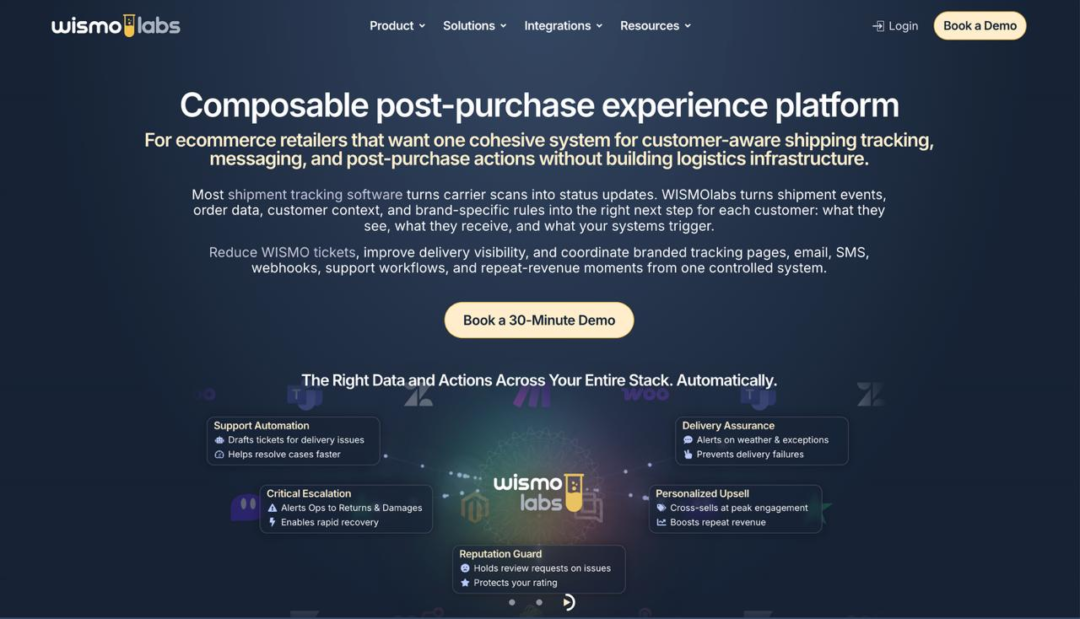
WISMOlabs goes beyond simple shipping tracking and notifications.
It acts as a contextual communication layer that supports customers exactly when they need it most – starting at checkout, through shipping and delivery, and even afterward.
It combines real-time carrier data, exception handling, branded tracking, and proactive notifications. The goal is simple: reduce those WISMO inquiries and give retailers more oversight of the delivery journey.
The platform really shines by focusing on communication before problems turn into support tickets. When delays or delivery issues pop up, it can trigger different customer experiences depending on the actual situation. It pulls together tracking info from multiple carriers and layers in order details, customer history, and shipment behavior to make messages feel relevant and timely.
Retailers often notice fewer “Where is my order?” conversations as a result. Customers feel less in the dark, too.
You’ll also find useful features like branded tracking pages, self-service lookup, engagement reporting, and coverage for over 750 carriers.
A lot of teams exploring options beyond AfterShip aren’t looking for more tracking features. They want stronger communication throughout the post-purchase journey.
Key strengths:
- Branded tracking pages
- WISMO reduction workflows
- Intelligent shipment notifications
- Delivery exception communication
- Self-service order lookup
- Customer engagement analytics
- Support for 750+ carriers
Best for: Brands focused on customer communication, WISMO reduction, and post-purchase experiences built around logistics data, order information, and customer context.
2. Narvar: When Scale Starts Creating New Problems
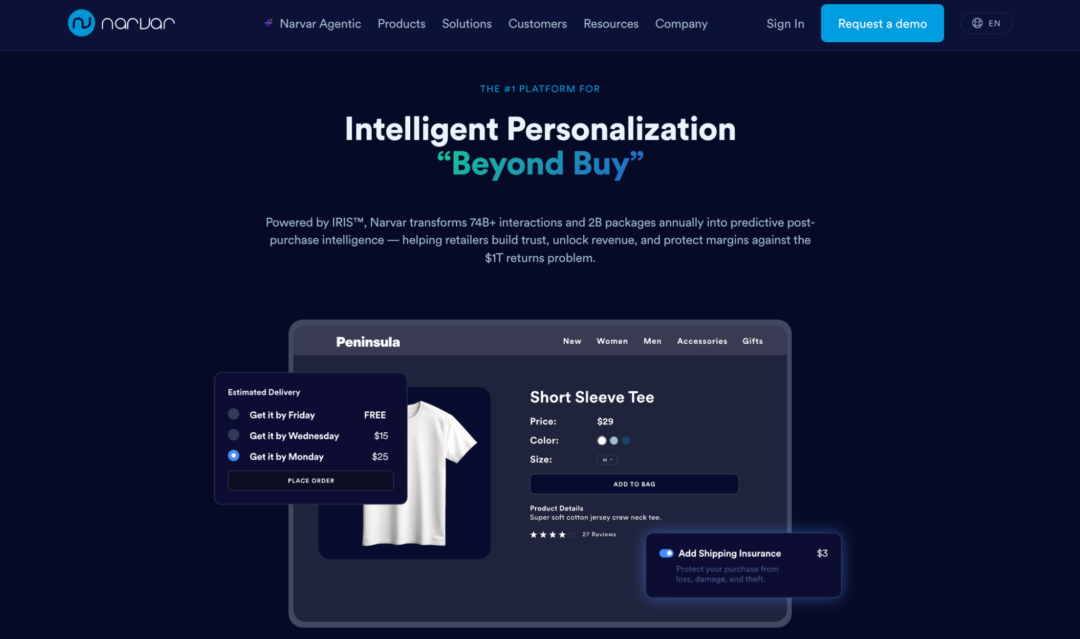
A retailer shipping 500 orders a week and a retailer shipping 500,000 orders a week are dealing with very different realities. Narvar has spent years building for the second group.
The platform is often considered when brands need stronger coordination between tracking, returns, customer communication, and large-scale retail operations.
It’s not necessarily the simplest option on this list. That’s also why many enterprise teams like it. The complexity exists because enterprise retail is complex.
Key strengths:
- Enterprise post-purchase ecosystem
- Order tracking
- Returns management
- Customer communication tools
- Large retail integrations
Best for: Enterprise retailers.
3. parcelLab: For Brands That Obsess Over Customer Experience
Some companies look at delivery emails and see operational updates. Others see customer touchpoints. parcelLab was built for the second group.
The platform gives retailers much more freedom to shape communication around delivery milestones, customer behavior, and shipping events.
For brands investing heavily in customer experience, those interactions often matter more than traditional marketing campaigns. Customers may ignore a promotional email. They rarely ignore delivery updates.
Key strengths:
- Personalized delivery communication
- Customer engagement workflows
- Branded experiences
- Delivery milestone messaging
- Advanced customization
Best for: Experience-focused ecommerce brands.
4. Wonderment: For Teams That Want Simplicity
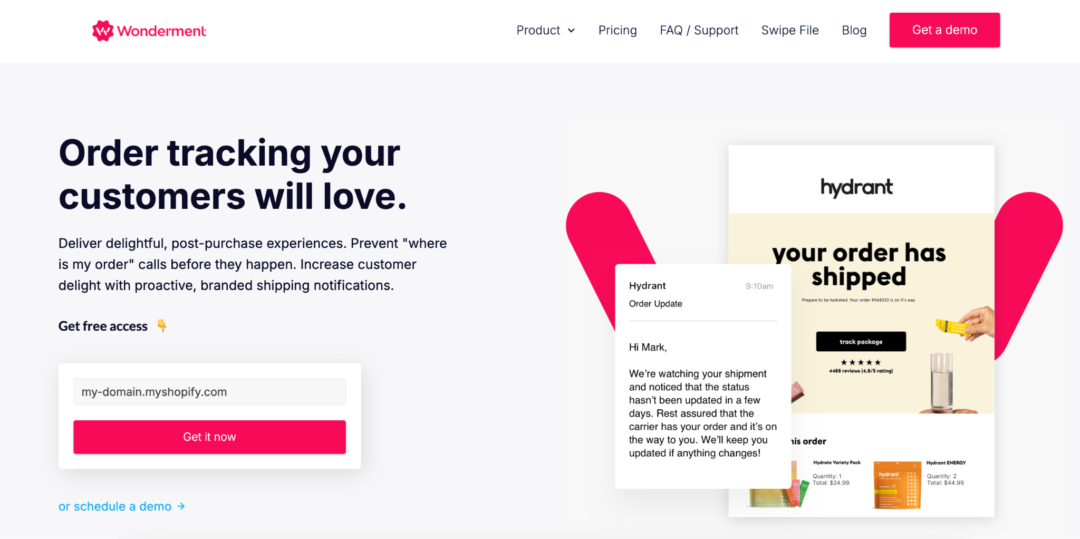
Not every company searching for an AfterShip alternative wants a bigger platform. Sometimes they want a simpler one. Wonderment has built a reputation among Shopify and DTC brands by focusing on visibility rather than complexity.
The experience feels clean. Customers get updates. Support teams spend less time answering routine questions. For many growing brands, that’s enough. And sometimes enough is exactly what they’re looking for.
Key strengths:
- Shopify-friendly setup
- Order visibility
- Delivery notifications
- Customer tracking experiences
- Fast implementation
Best for: DTC and Shopify brands.
5. Malomo: When Tracking Pages Start Looking Like Wasted Traffic
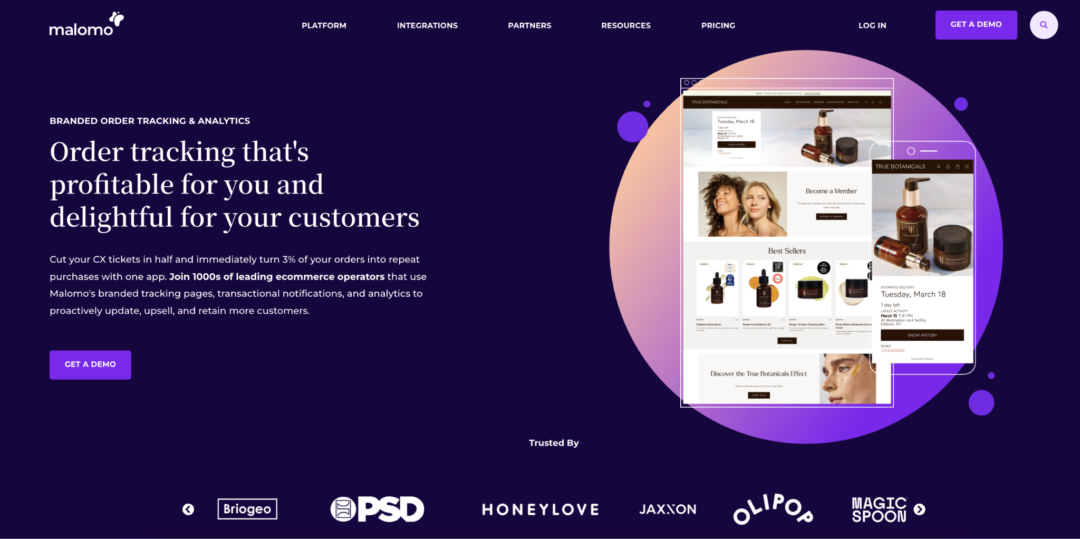
Most customers visit a tracking page more than once. Some visit it several times. Malomo was built around a simple question.
If customers are already coming back, why send them somewhere that doesn’t look or feel like your brand?
The platform turns tracking pages into branded experiences that keep customers connected to the retailer rather than pushing them toward carrier websites. For many direct-to-consumer brands, that’s the entire appeal.
Key strengths:
- Branded tracking pages
- Customer engagement tools
- Retention-focused experiences
- E-commerce integrations
- Simple deployment
Best for: Brands investing in post-purchase branding.
6. WeSupply Labs: When Returns Become Part of the Conversation
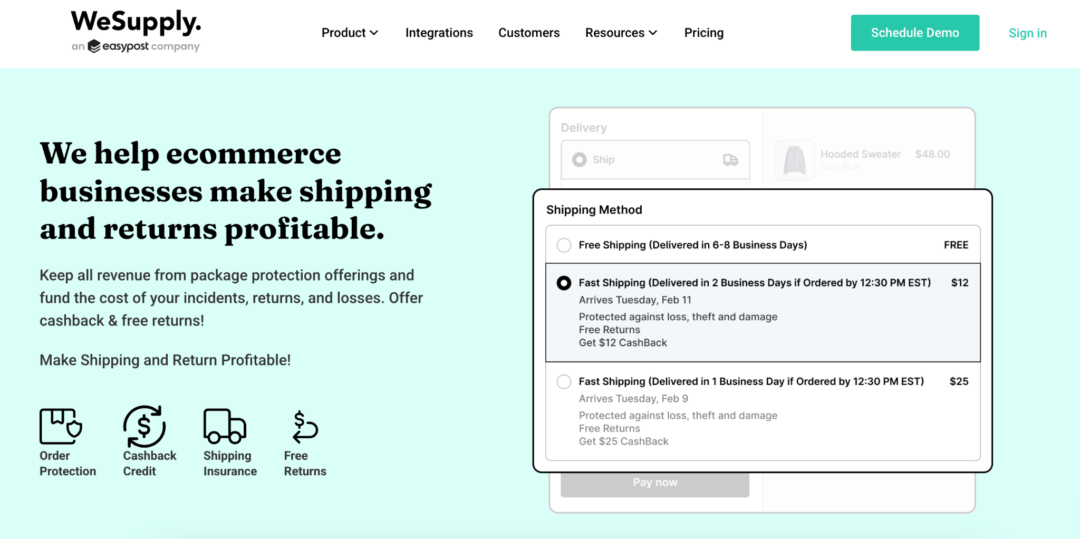
A surprising number of retailers begin evaluating alternatives because they realize the post-purchase experience extends well beyond delivery.
Sooner or later, returns enter the picture. That’s where WeSupply Labs often gains attention.
The platform combines shipment tracking, returns management, exchanges, and self-service workflows in a way that helps retailers manage more of the customer journey from one place.
For businesses processing significant return volume, that broader perspective can be valuable.
Key strengths:
- Shipment tracking
- Returns management
- Exchange workflows
- Customer notifications
- Self-service experiences
Best for: Retailers focused on returns and post-purchase operations.
7. Parcel Perform: For Retailers Watching the Shipping Network
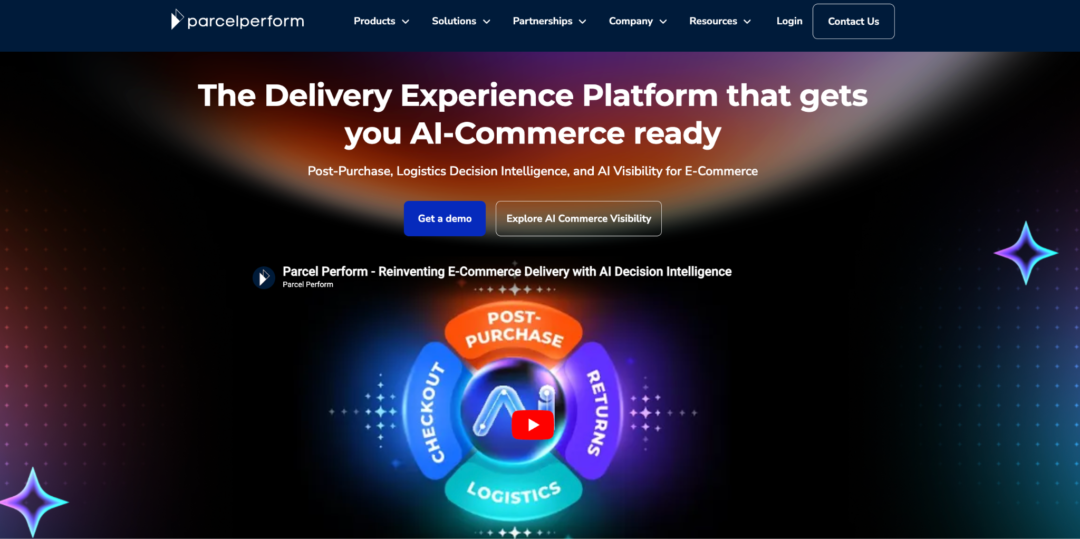
Most tools on this list start with the customer. Parcel Perform often starts with the shipment network itself.
Large retailers need to understand which carriers are performing well, where delays are increasing, and how delivery operations are changing over time.
That level of visibility can be difficult to achieve without dedicated analytics. Parcel Perform fills that gap while still providing customer-facing tracking capabilities.
Key strengths:
- Multi-carrier tracking
- Delivery analytics
- Carrier performance reporting
- Global shipment visibility
- Operational reporting
Best for: Retailers managing complex shipping operations.
Quick Comparison
The reasons brands leave AfterShip vary widely. Some want stronger communication, some need better analytics, and others simply need software that has grown alongside the business.
Here’s a quick overview of where each alternative stands out.
| Platform | Best For | Main Reason Brands Switch |
| WISMOlabs | WISMO reduction | More proactive customer communication |
| Narvar | Enterprise retail | Broader post-purchase ecosystem |
| parcelLab | Customer experience | More personalized engagement |
| Wonderment | DTC brands | Simpler visibility workflows |
| Malomo | Branding | Better branded tracking experiences |
| WeSupply Labs | Returns management | Broader post-purchase coverage |
| Parcel Perform | Logistics teams | Stronger analytics and reporting |
The Moment Brands Start Looking Elsewhere
The interesting thing about AfterShip alternatives is that most retailers don’t start searching because they’re unhappy. They start searching because they’re growing.
The challenges that appear at 10,000 orders per month rarely look the same as the challenges that existed at 1,000. Support volume increases. Customer expectations rise. Operations become more complicated. Tracking remains important, but it stops being the entire conversation.
That’s usually when brands begin looking beyond shipment visibility and start thinking about the broader post-purchase experience.
The Search Usually Isn’t About Tracking
Very few retailers wake up one day and decide they need a different tracking page. What they usually want is something else: fewer support tickets, better communication, more control over customer experiences, and stronger visibility into what happens after checkout.
The platforms on this list approach those goals from different angles, which is exactly why the “best” alternative depends on what changed inside the business in the first place.
The tracking page may have started the search. The real reason behind it is usually much bigger.