
A lot of people realize the same thing halfway through learning a language. They understand more words than they can actually use. They recognize grammar patterns. They complete lessons consistently. They maintain long streaks inside apps. But the moment a real conversation starts, confidence disappears almost immediately.
That experience is incredibly common because many language platforms were originally designed around repetition and retention — not communication. Now the market is shifting.
More learners want platforms that help them think, react, and speak naturally instead of endlessly reviewing vocabulary lists or tapping through exercises. Speaking practice, conversational confidence, pronunciation training, AI dialogue simulation, and flexible self-study are becoming much bigger priorities. The strongest platforms are adapting around that shift.
Here are seven language learning platforms that approach conversation practice much more seriously than traditional flashcard-heavy systems.
1. Promova
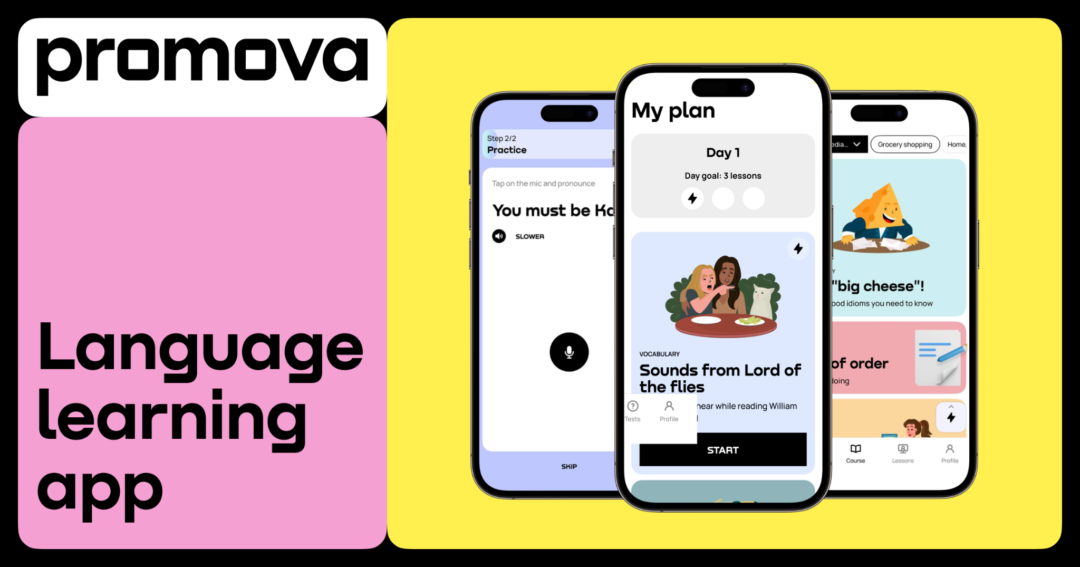
Promova language learning app for people who want to speak focuses heavily on helping learners become more comfortable using language actively instead of passively reviewing lessons.
The platform combines structured self-study with AI speaking practice, AI conversations, and interactive exercises designed to make independent learning feel more practical and less repetitive. One noticeable difference is how communication-focused the experience feels.
Promova integrates:
- AI role-play conversations
- Speaking-focused exercises
- Shadowing lessons
- Pronunciation support
- Scenario-based communication practice
- Public speaking content
- AI tutor interactions
That creates a more active learning environment than platforms centered mostly around memorization loops.
The company also puts unusual emphasis on accessibility.
Promova was one of the first language platforms to introduce features specifically designed for learners with dyslexia and ADHD, including Dyslexia Mode 2.0 and White Noise Mode for ADHD learners. That accessibility-first approach makes the platform stand out in a category where many apps still follow fairly rigid learning structures.
Another interesting detail is the variety of learning paths beyond standard language courses.
Users can access:
- English for Public Speaking
- Neurodiversity in the Workplace
- American Sign Language (ASL)
- Shadowing-based lessons
- English-to-English learning experiences
The platform currently supports multiple languages, including English, Spanish, French, German, Italian, Korean, Japanese, Chinese, Portuguese, Arabic, and Ukrainian.
Promova is especially appealing for learners who want flexible speaking practice without relying entirely on scheduled live tutoring sessions.
2. Duolingo
Duolingo remains one of the most recognizable language learning platforms globally, largely because it made self-study feel lightweight and approachable for casual learners.
The platform still relies heavily on gamification, streak systems, and short-form exercises, but it has expanded its speaking and AI capabilities considerably over time.
Conversation-oriented features now include:
- Speaking exercises
- Interactive listening tasks
- AI conversation tools
- Pronunciation practice
- Scenario-based interactions
Duolingo works especially well for learners who want highly structured daily practice in short sessions.
The platform also supports a very wide range of languages and maintains one of the most beginner-friendly onboarding experiences in the category.
3. Babbel
Babbel takes a more conversation-oriented approach than many traditional language apps.
Instead of focusing mostly on gamification, the platform emphasizes practical dialogue patterns and real-world communication scenarios from early lessons onward.
Users practice:
- Everyday conversations
- Listening comprehension
- Pronunciation exercises
- Dialogue repetition
- Context-based vocabulary
Babbel is especially popular among adult learners who want language study to feel more applicable to travel, work, or daily communication instead of purely academic progression.
The platform also structures lessons in a relatively calm and focused way compared to more gamified competitors.
4. Busuu
Busuu combines self-paced language learning with community-based feedback and communication practice.
One of the more useful aspects of the platform is that learners can receive corrections from native speakers while progressing through structured lesson paths.
The experience includes:
- Speaking exercises
- Pronunciation tasks
- Dialogue practice
- Community feedback
- Grammar guidance
- Vocabulary training
Busuu works particularly well for learners who want more human interaction inside a structured self-study environment without committing fully to live tutoring platforms.
The interface also feels relatively clean and easy to navigate compared to some larger learning ecosystems.
5. Cambly
Cambly approaches language learning from the opposite direction of most app-first platforms.
Instead of prioritizing independent lessons, Cambly centers the experience around live speaking practice with tutors.
Learners can join conversations directly with native speakers and practice:
- Casual conversation
- Business English
- Interview preparation
- Pronunciation
- Public speaking
- Everyday communication
Cambly appeals strongly to learners whose biggest challenge is speaking anxiety.
The platform removes much of the pressure associated with formal classroom environments while still giving users direct conversational practice regularly.
6. italki
italki remains one of the strongest platforms for learners who want personalized speaking practice with tutors across a very large number of languages.
Unlike fully automated apps, italki focuses heavily on one-on-one conversation and customized instruction.
Learners can choose tutors based on:
- Teaching style
- Native language
- Pricing
- Availability
- Learning goals
The platform works especially well for intermediate learners who already understand basic grammar and vocabulary but need much more active speaking experience to improve fluency.
Because lessons are personalized, users can also focus heavily on specific communication goals like business conversations, travel, pronunciation, or interview preparation.
7. Rosetta Stone

Rosetta Stone still approaches language learning differently from many modern competitors.
The platform relies heavily on immersion-style learning, where users absorb vocabulary and sentence structures contextually instead of through direct translation.
Conversation practice includes:
- Pronunciation analysis
- Listening repetition
- Scenario-based learning
- Interactive speaking exercises
Rosetta Stone works best for learners who prefer slower, immersion-oriented learning experiences over fast, gamified progression systems.
The platform also remains popular among users who value consistency and long-term study habits over short-form engagement mechanics.
Speaking to AI feels less intimidating for many learners
A surprising number of people avoid speaking practice for one simple reason: they are afraid of sounding wrong. Live classes can feel stressful. Conversations with native speakers move too fast. Even language exchange apps sometimes create pressure to respond perfectly or immediately.
That is one reason AI speaking practice is growing so quickly. People are often much more willing to experiment, repeat themselves, make mistakes, and practice awkward conversations when they are talking to an AI tutor instead of another person. The environment feels lower-pressure, which actually helps many learners practice more consistently.
For beginners, especially, that extra comfort matters a lot. Instead of waiting until they feel “ready” to speak, learners can start building conversational habits much earlier through AI role-play, pronunciation exercises, and simulated real-world scenarios.
More learners are optimizing for confidence now
One of the more interesting shifts happening in language learning is psychological. People are becoming less interested in “completing” lessons and more interested in feeling comfortable during actual conversations.
That changes what makes a platform useful. Vocabulary retention still matters. Grammar still matters. But learners increasingly want speaking repetition, communication exposure, pronunciation practice, and flexible conversational environments that reduce hesitation over time.
AI is accelerating that shift because learners can now practice conversations far more frequently without depending entirely on live classes or rigid schedules.
The strongest platforms are adapting around that reality.
And honestly, that probably makes language learning feel much more human than endless flashcards ever did.