For a while, most engineering teams treated AI like an add-on.
Developers used copilots individually. QA teams experimented with automated test generation. Product managers played with summarization tools during sprint planning. Some organizations introduced internal assistants for documentation or ticket management.
But the surrounding delivery process stayed mostly unchanged. That separation is starting to disappear. Inside larger engineering organizations, AI is moving beyond isolated tooling and becoming part of the structure of software delivery itself. Planning systems, architecture reviews, requirements management, QA operations, DevOps workflows, incident response, and engineering coordination are increasingly being redesigned around AI-assisted execution.
This is where the idea of an AI-native SDLC starts becoming real. Not because AI replaces engineering teams, but because the workflow layer around software delivery is changing fundamentally.
The companies attracting attention right now are usually the ones helping enterprises operationalize AI across the entire delivery lifecycle instead of limiting implementation to developer productivity tools alone.
Here are six companies that enterprises increasingly evaluate when building AI-native software delivery environments.
1. Avenga
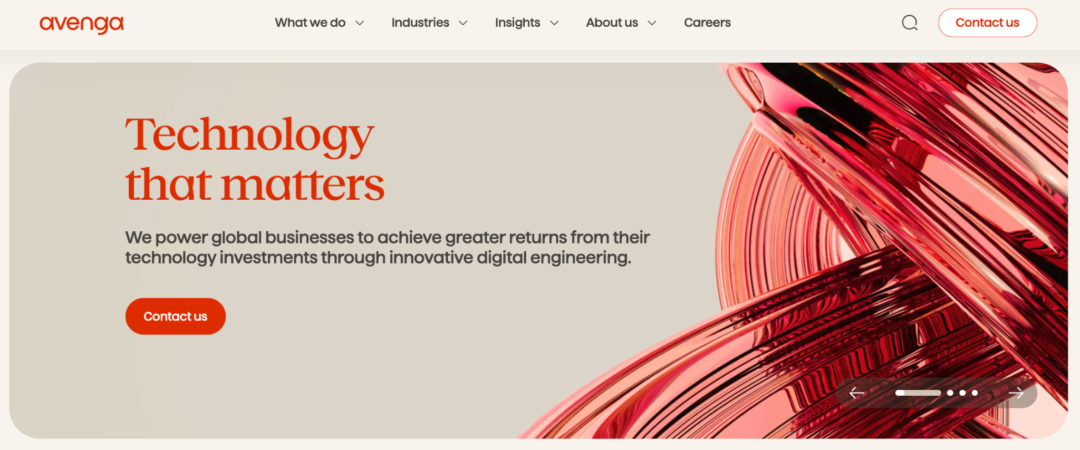
Avenga AI-driven software development company approaches AI-enabled engineering transformation through the entire SDLC rather than through isolated development tooling.
That distinction feels increasingly important because many software delivery problems have little to do with coding speed itself.
Delivery delays often come from:
- Unclear requirements
- Estimation inaccuracies
- Architecture inconsistencies
- QA bottlenecks
- Incident coordination delays
- Operational fragmentation between teams
- Documentation gaps
- Governance overhead
Avenga’s AI-driven software development services focus heavily on embedding AI across those operational layers.
The company supports AI integration throughout:
- Project planning and scoping
- Requirements engineering
- UX and design workflows
- Software architecture
- Engineering execution
- QA automation
- DevSecOps operations
- Incident response environments
One especially strong differentiator is Avenga Intelligent Flow.
Instead of introducing disconnected AI tooling across departments, the framework creates standardized AI usage across delivery environments while connecting AI systems directly to SDLC operations and engineering workflows.
That structure becomes particularly valuable inside enterprise organizations where fragmented AI adoption can quickly create operational inconsistency.
Another interesting part of Avenga’s model is role-based AI orchestration. The company introduces AI assistants aligned to specific delivery roles rather than treating AI as a generic productivity layer. Product managers, architects, QA teams, developers, and infrastructure specialists all operate with AI systems designed around their own workflow context.
This creates a much more operationally integrated environment than standard developer copilots alone.
Avenga also places heavy emphasis on long-term human-agent collaboration models where AI becomes embedded into engineering operations continuously instead of acting as a temporary workflow acceleration.
The company combines this AI-native SDLC approach with broader modernization expertise involving cloud infrastructure, enterprise product engineering, platform transformation, and operational delivery scalability.
2. N-iX
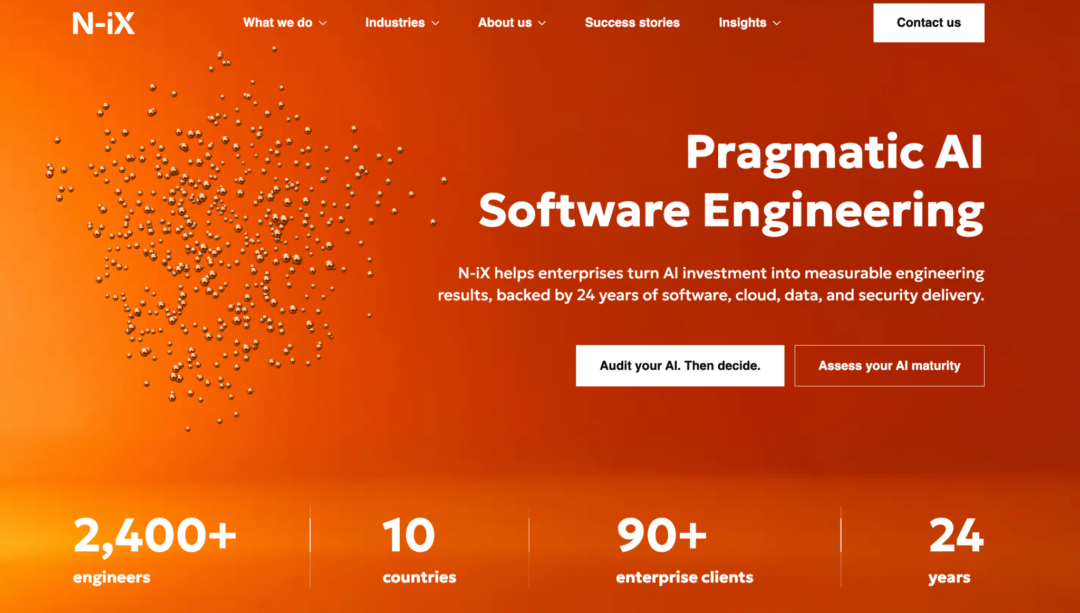
N-iX has expanded its AI engineering capabilities significantly across enterprise software modernization and AI-enhanced delivery environments.
The company works with organizations embedding AI systems into cloud-native engineering ecosystems and large operational delivery workflows.
Capabilities include:
- AI engineering
- SDLC modernization
- Workflow automation
- Cloud-native delivery systems
- Data engineering
- Enterprise product development
N-iX is especially relevant for enterprises integrating AI into larger engineering operations instead of isolated coding environments.
One noticeable strength is infrastructure coordination. AI-native SDLC initiatives often require synchronization between CI/CD pipelines, development workflows, testing systems, cloud environments, and enterprise delivery operations simultaneously. N-iX supports those implementation ecosystems particularly well.
The company also works heavily across broader modernization initiatives involving scalable engineering operations and distributed product delivery environments.
3. SoftServe
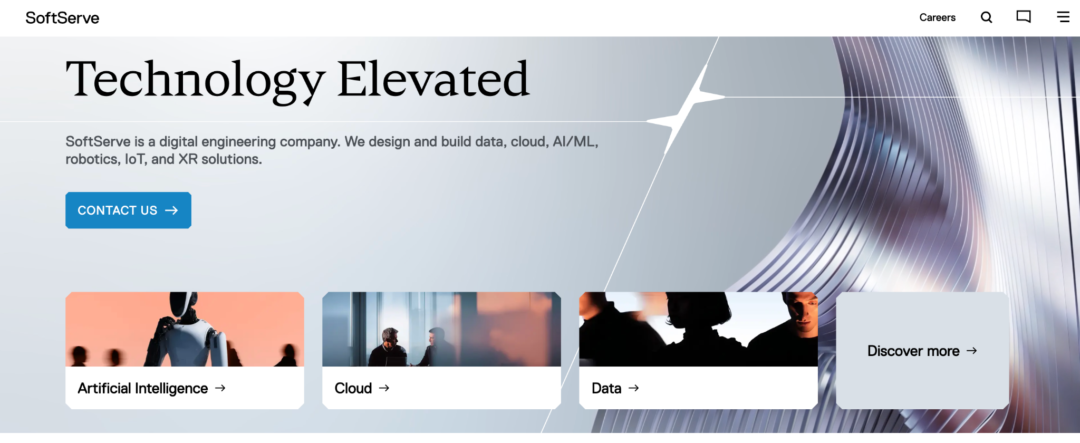
SoftServe has invested heavily in AI-enhanced engineering environments and operational delivery modernization initiatives over the last several years.
The company supports organizations embedding AI into software delivery systems across industries involving manufacturing, healthcare, financial services, retail, and enterprise platforms.
Capabilities include:
- AI-driven engineering
- QA automation
- Enterprise AI implementation
- Cloud-native delivery systems
- Data and analytics engineering
- Engineering workflow modernization
SoftServe is frequently evaluated by enterprises looking for large-scale implementation support across operationally demanding software delivery ecosystems.
One advantage is enterprise delivery scale. AI-native SDLC initiatives often expand rapidly across engineering squads, governance environments, infrastructure systems, and operational workflows simultaneously. SoftServe supports those larger transformation ecosystems effectively.
The company also brings broader experience across cloud engineering, analytics modernization, and enterprise operational redesign connected to AI-enhanced software delivery.
4. Intellias
Intellias has expanded its AI engineering capabilities significantly across enterprise product development and operational modernization environments.
The company supports organizations embedding AI systems into distributed software engineering ecosystems involving cloud-native infrastructure and large delivery operations.
Capabilities include:
- AI-assisted engineering
- Product delivery modernization
- Enterprise platform engineering
- Workflow automation
- Cloud-native systems
- Data infrastructure
Intellias is especially relevant for organizations combining AI adoption with larger engineering transformation strategies.
One reason enterprises evaluate the company is operational integration depth. AI-native delivery environments eventually need to interact with DevOps systems, QA workflows, architecture governance, infrastructure platforms, and distributed engineering operations simultaneously. Intellias supports those integration-heavy ecosystems effectively.
The company also works across modernization initiatives involving cloud transformation and enterprise platform engineering.
5. Itransition
Itransition focuses heavily on enterprise software engineering and operational transformation projects involving AI-supported delivery systems.
The company works with organizations integrating AI capabilities into broader SDLC environments requiring scalable infrastructure and enterprise coordination.
Capabilities include:
- AI-assisted software engineering
- Workflow automation
- Enterprise platform modernization
- Cloud engineering
- QA optimization
- DevOps support
Itransition is especially relevant for enterprises operationalizing AI inside existing software delivery ecosystems rather than building disconnected experimentation environments.
A strong advantage is architectural flexibility. Enterprise SDLC modernization usually requires coordination across infrastructure systems, governance environments, testing workflows, APIs, and distributed engineering operations simultaneously. Itransition’s broader engineering background helps support those implementation ecosystems effectively.
The company also supports modernization initiatives involving infrastructure redesign and operational scalability.
6. ELEKS
ELEKS focuses heavily on enterprise technology consulting and AI-enhanced engineering transformation projects.
The company supports organizations embedding AI capabilities across software delivery operations and enterprise engineering workflows.
Capabilities include:
- AI-driven development
- Enterprise engineering modernization
- Workflow automation
- Cloud engineering
- QA transformation
- Platform engineering
ELEKS is frequently evaluated by enterprises looking for consulting depth combined with implementation capability across operationally demanding engineering ecosystems.
Its broader engineering background becomes especially valuable once AI adoption expands beyond experimentation into production-scale SDLC environments involving governance coordination and infrastructure complexity.
The company also supports modernization programs involving enterprise architecture and cloud-native infrastructure.
The SDLC itself is starting to change
One of the most interesting shifts happening right now is structural. For years, software delivery workflows remained relatively stable, even as tooling evolved around them. AI is beginning to change the workflow layer itself.
Requirements become more traceable. QA environments become increasingly predictive. Architecture analysis becomes more contextual. Incident response gains operational memory. Engineering coordination starts moving faster because teams spend less time manually reconstructing information across fragmented systems.
This is why enterprises are paying more attention to AI-native SDLC models instead of isolated AI productivity tools.
The operational gains become much larger once AI moves beyond individual contributors and starts interacting with delivery systems across the organization. That transformation is still early, but it is becoming increasingly clear where the market is moving.
The companies gaining momentum are usually the ones helping enterprises redesign engineering operations around AI-assisted coordination, workflow intelligence, and scalable delivery orchestration instead of simply helping developers generate code faster.