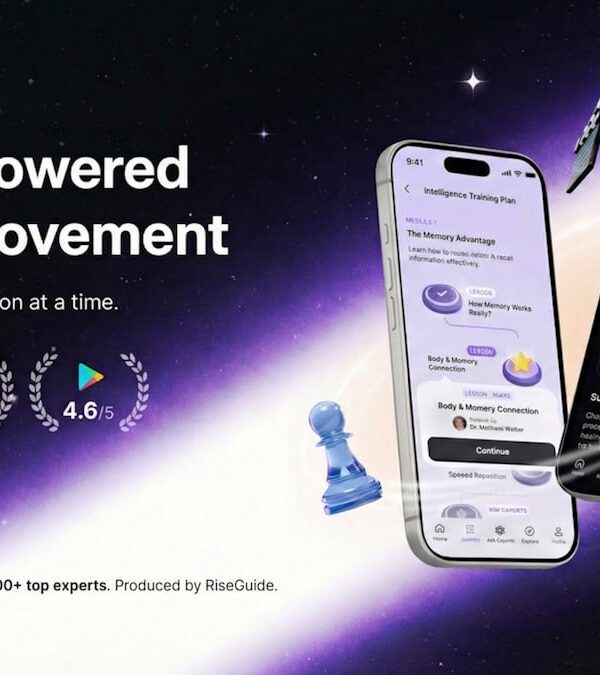
Continuous learning is necessary today. Finding time for regular courses is hard. Micro-learning uses small, manageable units. It integrates into everyday routines easily. Here we explain the approach, its advantages for busy people, and review a few delivery platforms.
What Makes Micro-Learning Effective for Busy People
Micro-learning uses short, targeted lessons (5–20 min). It suits people with packed schedules. Three key factors:
- Short sessions: Easy to do in spare minutes during the day.
- Less mental strain: Focused modules improve recall compared to long study blocks.
- Immediate access: Pull up specific knowledge exactly when it’s relevant.
The format matches how most people actually live and work now.
Micro-Learning Platforms That Fit Into a Busy Daily Routine
Micro-learning only works if you have the right platform. These eight are designed for the time-starved. Their purposes vary, but they all break learning into daily micro-steps.
1. RiseGuide
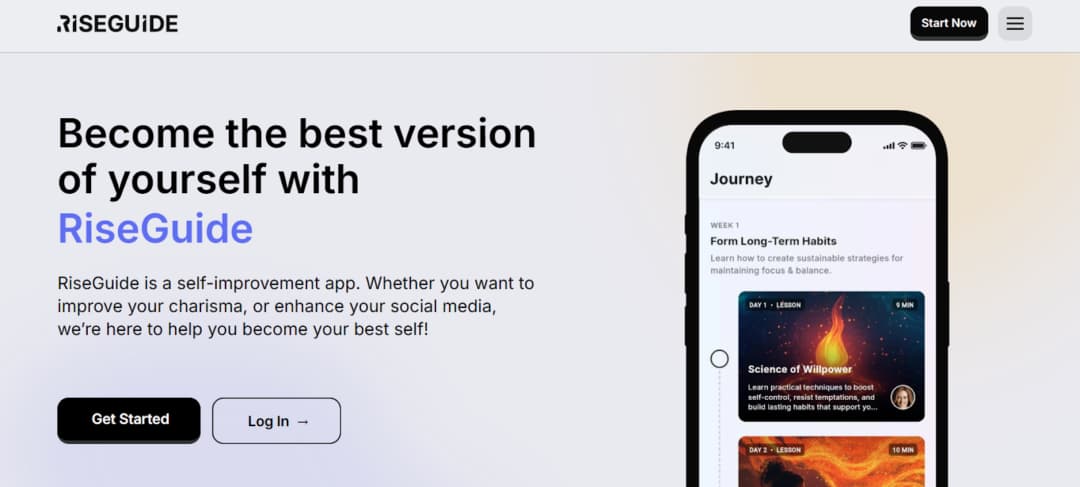
RiseGuide is a self-improvement app based on micro-learning. It delivers short daily lessons on communication, confidence, charisma, intelligence, memory, and cognitive skills. Users select one path or combine several according to their goals.
Content is drawn from expert methods and insights of neuroscientists, authors, creators, strategists, leaders, and top performers. Lessons turn knowledge into clear, practical daily steps.
Interactive features include frameworks, cheat sheets, templates, exercises, reinforcing quizzes, video materials, downloadable workbooks, flashcards, and daily to-dos. The platform also includes SEEK — a dedicated search engine for expert knowledge — allowing users to ask questions and receive sourced, research-backed answers on demand.
An Explore section provides access to a broader library of expert-powered lessons across topics such as communication, charisma, cognitive development, and audience growth.
Pros
- Daily bite-sized lessons that fit easily into busy schedules.
- Expert-powered content grounded in trusted research and professional insight.
- Practical learning tools that help turn knowledge into action.
- SEEK search engine for quick, sourced answers to specific questions.
- Structured paths combined with the option to explore additional topics.
Cons
- Needs daily consistency: Progress requires steady effort.
- Upfront setup: Quiz and plan take initial time.
- Feels generic: May need tweaking for niche goals.
2. Mindvalley
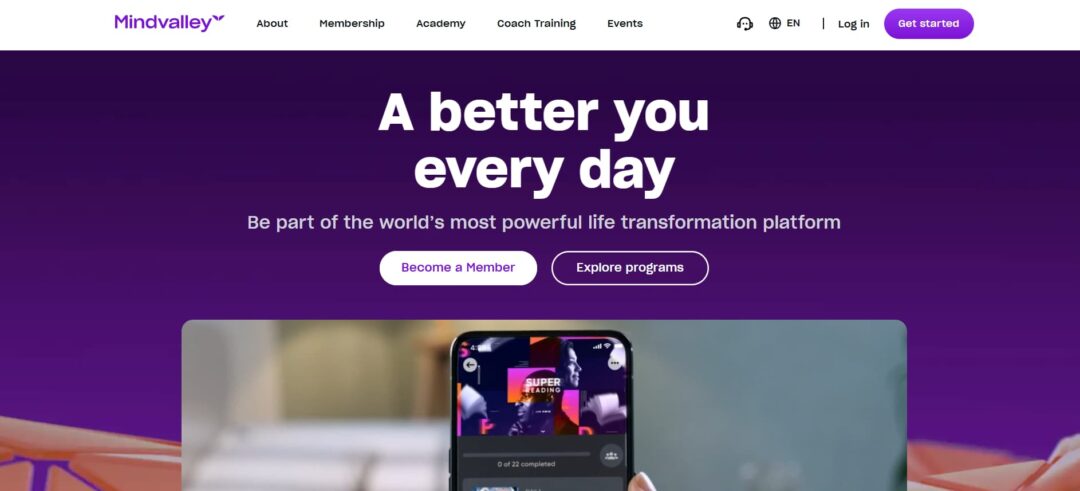
Mindvalley breaks personal growth topics into daily Quests lasting 15–20 minutes each. Programs focus on areas such as mindfulness, productivity, or fitness, keeping lessons short enough for real-life schedules.
High-quality video and audio lessons feature well-known instructors. Users access content during commutes, breaks, or downtime. Global community interaction and built-in habit tracking encourage regular participation. Change builds through small, repeated actions.
Pros
- Daily Quests: Clear 20-min action plan, no decision fatigue.
- High-quality content: Engaging cinematic lessons from top experts.
- Community support: Global peers help with motivation and consistency.
- All-in-one: Covers wellness, mindset, and relationships in one place.
Cons
- Expensive: High annual subscription cost.
- Too many options: Overwhelming number of Quests to choose from.
- Fixed daily time: 15-20 min commitment, not very flexible.
- Soft skills only: No focus on technical or job-specific training.
3. Masterclass
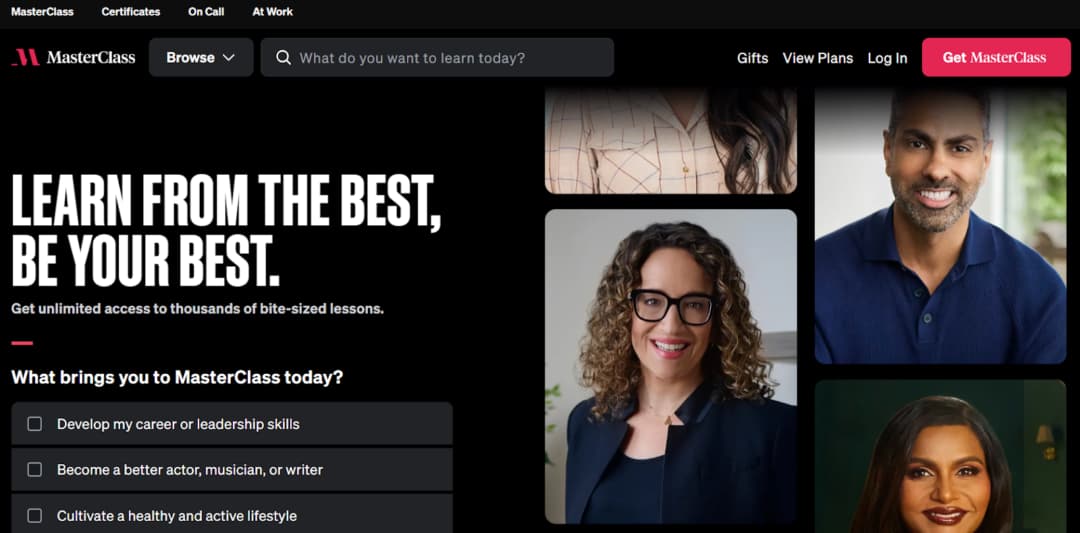
MasterClass delivers premium video instruction from prominent figures across writing, cooking, business, sports, and similar domains. Lessons consist of roughly 10-minute modules. Polished production keeps content clear and engaging.
The platform includes audio playback and offline access. Users complete lessons in short intervals — commuting, exercising, waiting.
Pros
- Short videos: 10-min segments, easy to pause.
- Audio mode: Good for commuting, chores, gym.
- Offline downloads: Works without internet.
- High motivation: Quick inspiration from big names.
Cons
- More theory than practice: Philosophy over drills.
- Passive format: No exercises, quizzes, or community.
- Expensive: High cost for mostly inspirational content.
4. Studio.com
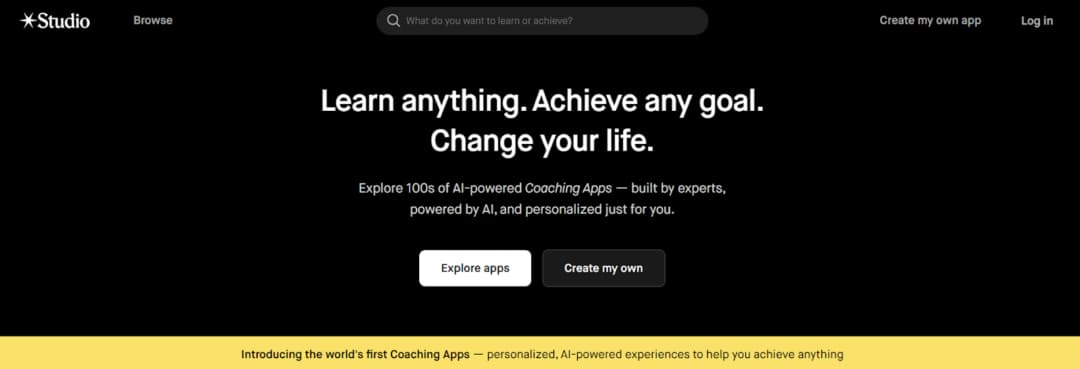
Studio.com addresses aspiring creatives with constrained schedules who prefer hands-on learning. Courses are structured as 30-day projects. Daily assignments, limited to 15–30 minutes, advance users toward a completed work — a musical track, short video, or design portfolio.
Instruction remains concise and task-oriented. The format supports consistent progress despite demanding routines. Users develop skills incrementally while producing tangible results.
Pros
- Daily clear tasks: Small objectives build to a full project.
- Micro-actions: Learn skills via short daily practice.
- Real output: Finish a portfolio piece in 30 days.
- Peer feedback: Quick community input for motivation.
Cons
- Fixed schedule: Set start dates and daily deadlines.
- Month-long commitment: Almost daily time needed.
- Creative only: Limited to music, film, and design skills.
- Feedback varies: Instructor interaction may be limited.
5. Imprint
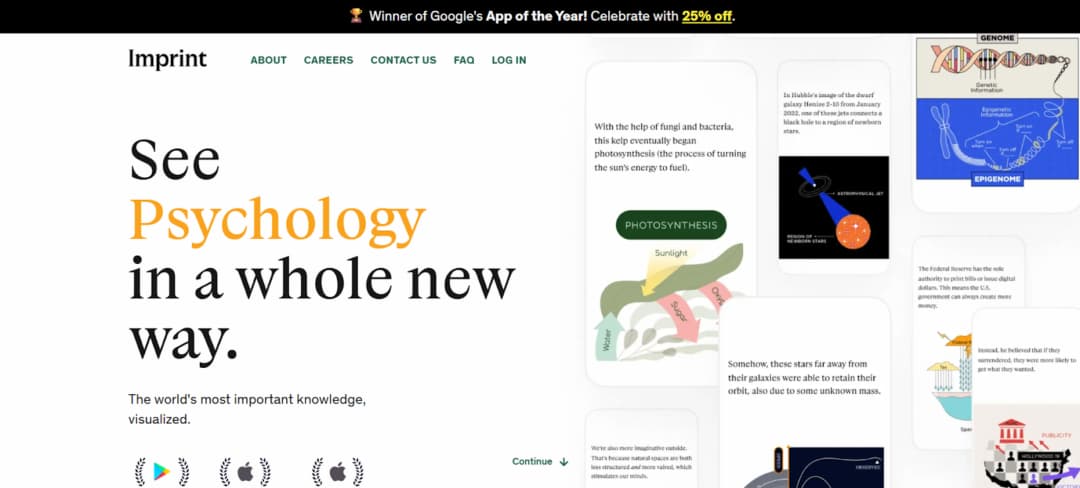
Imprint breaks non-fiction content into 3–7 minute visual modules. It summarizes core concepts from philosophy, psychology, finance, and leadership books using clean animation and graphics.
Designed for quick intervals like short breaks or queues. Daily prompts and quizzes encourage steady engagement. The focus is on efficient retention with low time demand.
Pros
- Ultra-short lessons: Few minutes, dense visual format.
- Better retention: Animated graphics aid quick memory.
- Fast overviews: Core ideas from books/topics in minutes.
- Daily quizzes: Immediate reinforcement after each lesson.
Cons
- Very shallow: Misses nuance and details.
- Passive only: Insights, no real steps or practice.
- Limited library: Gaps in niche or specific titles.
- Paid access: Subscription needed for full content.
6. Headway
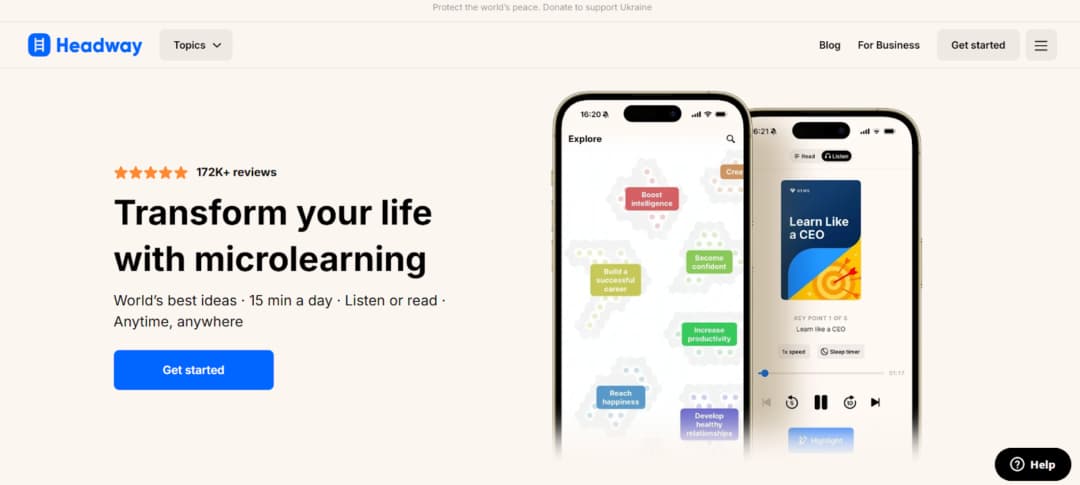
Headway is designed for people short on time who need the primary insights from top non-fiction books rather than reading them completely. Each summary comes in audio or text form and takes roughly 15 minutes, making it convenient for travel or routine moments.
Learning streaks and daily prompts build consistency. To help you remember, it uses spaced reminders and lets you bookmark essential insights.
Pros
- Multitask-friendly: Audio summaries work during commutes or chores.
- Predictable timing: Clear 15-min (or similar) lengths.
- Builds habit: Streaks and daily recommendations.
- Useful takeaways: Action-focused from self-help/business/psych books.
Cons
- Shallow coverage: Just summaries, not book depth.
- Library limits: Gaps in newer or niche titles.
- Subscription problems: Reported billing complaints.
- Minimal interaction: Basic flashcards, little community, or exercises.
7. Docebo
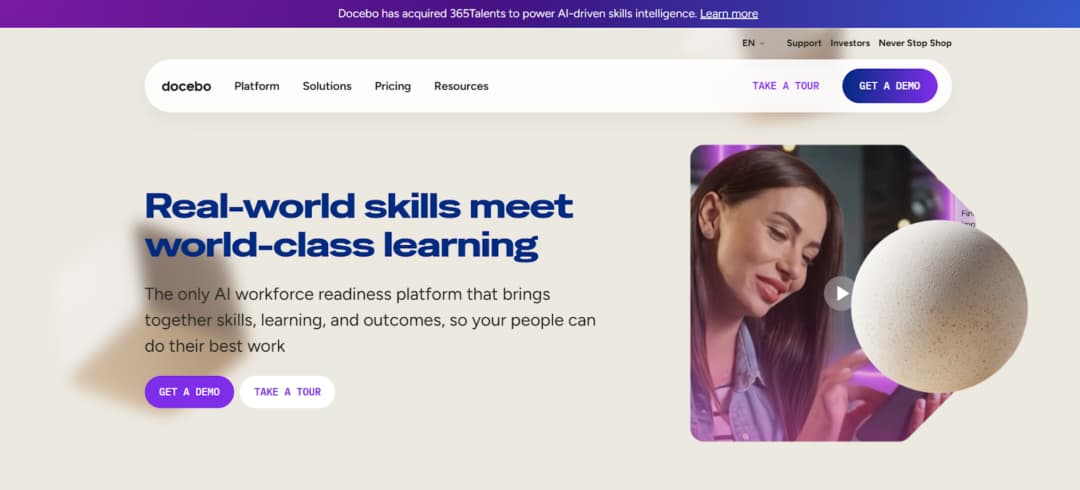
Docebo is an LMS designed for organizations seeking to implement formal training through micro-learning. It structures compliance, software, and soft-skills content into brief modules of 5–10 minutes, suitable for completion on mobile devices or during short breaks.
AI curates personalized pathways by analyzing performance gaps and supplying appropriate micro-lessons. This approach incorporates skill acquisition directly into the workday, limiting operational disruption and supporting timely fulfillment of training obligations.
Pros
- In-tool learning: Delivered via Slack/Teams integrations.
- Mobile-first: Complete training anywhere, anytime.
- AI personalization: Cuts irrelevant content.
- Efficient compliance: Short chunks for required modules.
Cons
- Enterprise tool: No personal sign-up.
- Employer-dependent: Content quality from company L&D.
- Feels obligatory: Mostly mandatory, low motivation.
8. Deepstash
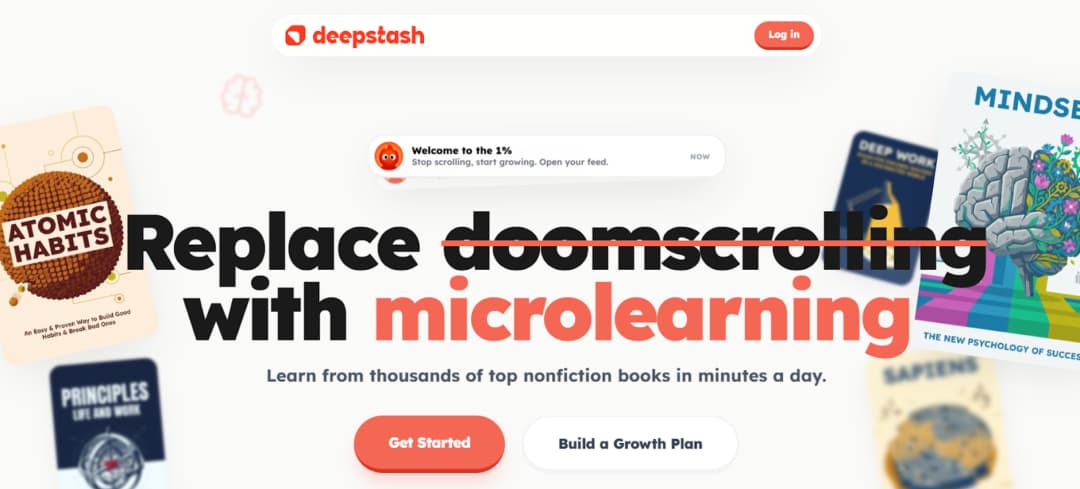
Deepstash trades in standalone ideas. Each card holds a single concept, tip, or quote, consumed in seconds. You pick your topics, curate a feed, and save the valuable insights to personal “stashes.” It’s built for the fastest possible mental download.
It is intended for users with minimal available time who seek rapid access to inspiration, a useful suggestion, or a fresh perspective in brief moments of downtime.
Pros
- Fast read: 30-60 sec per insight.
- Tailored feed: Focuses on your interests.
- Save option: Bookmark for later review.
- Free tier solid: Lots of value without paying.
Cons
- Fragmented: No depth or connections between ideas.
- Awareness only: Doesn’t teach skills or routines.
- Distraction risk: Can turn into mindless scrolling.
Conclusion
Finding large blocks of free time is unrealistic. Micro-learning solves this by using the small intervals you already have—between tasks, during a commute, or over coffee. It focuses on one specific concept or action at a time, making learning efficient and actionable.
This approach integrates skill development directly into your daily flow. The result is consistent progress that accumulates without overwhelming your schedule, turning sporadic moments into steady growth.