
Software rollouts test every team’s patience. Users resist change. They ask endless questions. They make mistakes that create data chaos.
Digital adoption platforms emerged to fix these problems. They place guidance directly inside applications. Employees get help exactly when and where they need it. No more hunting through email threads or outdated PDFs.
Speed matters most during rollouts.
Every day of delay pushes back productivity gains. Weeks of setup mean weeks of frustration. Months of integration mean months of lost momentum.
This piece examines five platforms that prioritize implementation speed. The selection covers tools that support Salesforce, Oracle, NetSuite, and other critical systems. Some platforms go live within hours. Others require days. The differences come down to architecture, content ownership, and professional services requirements.
The common thread across all five? Teams can start without waiting for IT. Business users create guidance independently. Development resources stay focused on other priorities. For organizations facing tight timelines, that independence makes all the difference.
The platforms below are ranked by how quickly teams move from signing up to delivering live guidance.
1. Tango
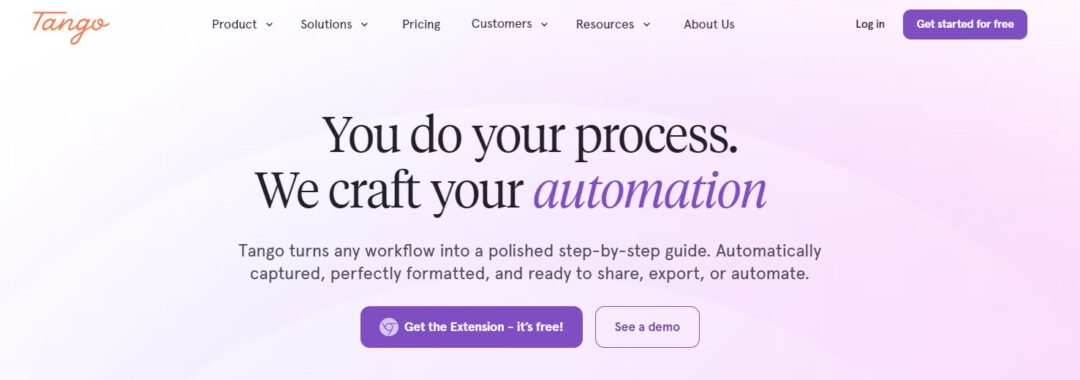
Tango is a top real-time enablement software for enterprise applications that prioritizes speed above all else. The firm launched four years ago out of San Francisco. HubSpot Ventures came on board in 2024. They saw the platform’s potential to fix process inefficiency and drive software adoption.
CEO Ken Babcock puts it simply. Usability beats feature bloat. Make digital adoption accessible. Do not overwhelm people with complexity.
Speed matters most. Teams capture workflows in minutes. Implementation takes minutes, not weeks or months.
The browser extension captures processes as users click through them. The platform then generates structured step-by-step guides with annotated screenshots automatically. Development teams are not required for setup.
Backend integration is unnecessary. The solution goes live within 24 hours of signing. The free tier allows teams to get started immediately.
What makes Tango fast:
- Browser extension captures workflows instantly without configuration
- No development team required for setup or ongoing maintenance
- Live within 24 hours of signing the agreement
- Free tier available for immediate testing and validation
- Works across all enterprise systems under one subscription
2. Appcues
Appcues serves as a superior software training alternative for operations managers who need quick deployment without professional services. The platform stands out with its no-code builder. Product managers build flows on day one. Marketers join in. Customer experience leads get involved, too.
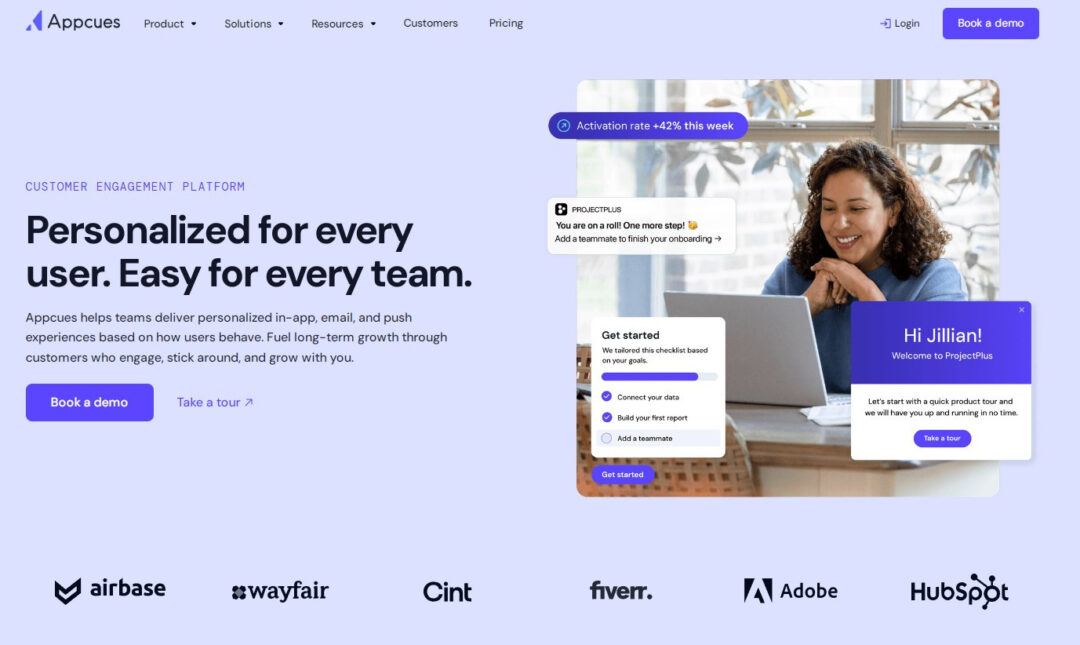
Development teams are not required for setup. Sprint cycles do not create bottlenecks. Implementation proceeds without professional services. Sprint cycles do not create bottlenecks.
Slideouts, pins, A/B testing, flow prioritization, and goals tracking give teams measurable control over user engagement. The platform coordinates messaging across in-app, email, mobile, and push channels. Users get help inside the product. They also get help when they step away. Email works. Push notifications work. Mobile works too.
G2 reviewers rate Appcues at 4.7 out of 5. That comes from over 1,600 reviews. People praise the ease of use. They also mention rapid deployment.
One catch. Appcues focuses on customer-facing products. It does not train employees on third-party tools like Salesforce or SAP. Citrix, VDI, and desktop application support are unavailable. The platform is also not designed for training employees on Salesforce, SAP, or Workday. This limits its usefulness for enterprise rollouts of internal business systems.
What makes Appcues fast:
- No-code builder allows non-technical teams to start immediately
- No professional services required for implementation
- Live within hours of signing up
- A/B testing enables rapid optimization without engineering
- Pre-built integrations with major platforms cut setup time
3. Stonly
Stonly delivers a high-quality in-app guidance platform for Salesforce and Oracle. Interactive guides are the core offering. Knowledge base integration comes built in.
Complex workflows become step-by-step guidance. Users follow instructions inside applications. They can also reference the same guides in the knowledge base. Two places. Same content. No duplication.
Teams can create guides without coding. The interface is designed for business users rather than developers. Guides update automatically when underlying processes change, reducing maintenance overhead. This automatic update capability means teams spend less time fixing broken guides and more time supporting users during rollouts.
Mid-market and enterprise organizations use Stonly for structured guidance. The platform handles complex software well. Analytics depth does not match Pendo or WalkMe. But reporting on guide completion and user engagement works fine.
Implementation takes days, not weeks. Professional services are not required for basic setup.
What makes Stonly fast:
- No-code guide creation for business users
- Automatic updates when processes change
- No professional services required for setup
- Knowledge base integration reduces documentation duplication
- Quick deployment for Salesforce and Oracle environments
4. Spekit
Spekit operates as a premier knowledge transfer tool for enterprise software deployments with a specialized focus on CRM environments. The platform surfaces training content directly inside Salesforce, Outreach, and other revenue tools. Content appears where representatives already work, cutting context switching and keeping information accessible during daily tasks.
Sales ramp and training reinforcement represent Spekit’s primary strengths. New representatives find answers inside the CRM without switching contexts. This reduces ramp time and maintains productivity during system transitions. Pre-built Salesforce integrations allow fast deployment for CRM-focused implementations. Teams can go live within days rather than weeks for core Salesforce use cases.
The narrow focus is both a strength and a limitation. Spekit works well for Salesforce-heavy organizations but is not suited for enterprise-wide software adoption across varied tool sets. Analytics cover content consumption only. Teams can see if a representative opened a knowledge card, but not whether that information changed how they worked in the CRM.
What makes Spekit fast:
- Pre-built Salesforce integrations cut implementation time
- No complex configuration required for basic setup
- Content surfaces where users already work
- Fast deployment for CRM-focused use cases
- Minimal training required for team adoption
5. Guidde
Guidde functions as a top real-time enablement software for enterprise applications through video-based documentation creation. The platform allows teams to create step-by-step video guides using a browser extension. Users click through their workflow while the extension captures the screen, adds annotations, and generates a shareable video guide.
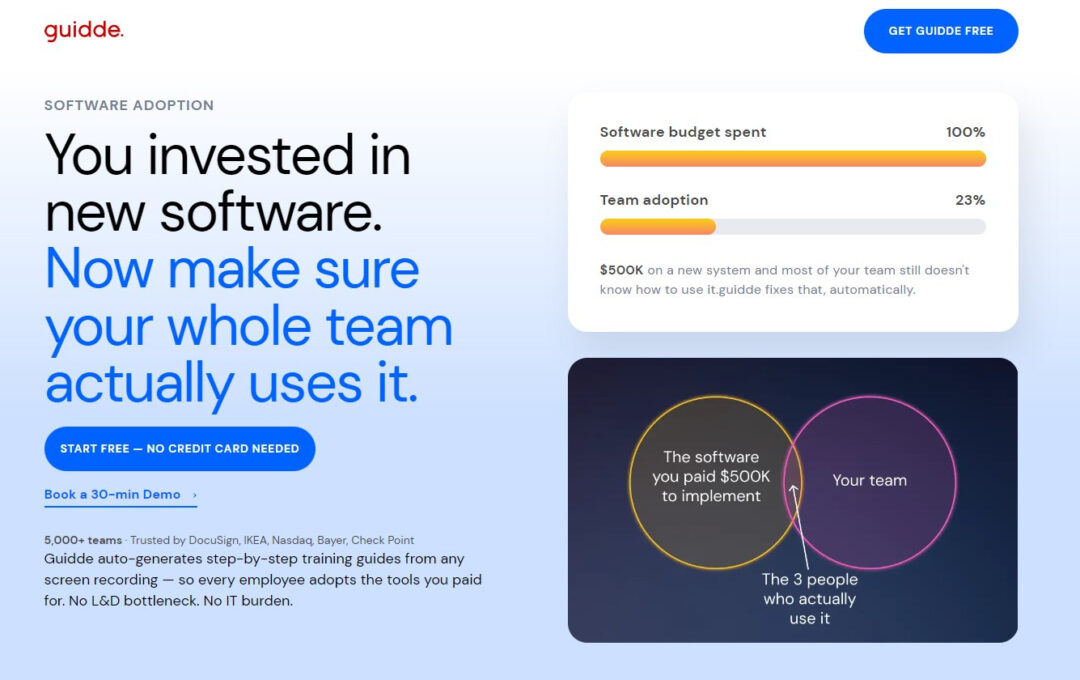
Guidde works well for visual learners. The video format demonstrates complex processes clearly. Teams capture screen activity, add annotations, and generate shareable guides.
Links work for sharing. Knowledge bases accept embeddings. Training materials can include exports, too.
The platform operates across web-based applications. That versatility supports enterprise rollouts involving multiple systems.
Implementation requires minimal setup. Teams can start creating guides within minutes of installing the extension. Development resources are not required for setup. Professional services are unnecessary. The platform focuses on documentation, not on in-app guidance.
That focus creates a limitation. Users cannot access contextual help during active use. Guidance lives outside the application, not inside it.
What makes Guidde fast:
- Browser extension enables immediate guide creation
- No development team required for setup
- Video format reduces training time for visual learners
- Quick sharing via links without complex integrations
- Minimal configuration needed to get started
Implementation Speed Comparison Table
The implementation speed differences become clearer when viewed side by side. Here is how the five platforms compare across key speed metrics.
| Platform | Time to Live | Professional Services Required | Key Speed Differentiator |
| Tango | Within 24 hours | No | Browser extension instant capture |
| Appcues | Within hours | No | No-code builder ready on day one |
| Stonly | Days | No | Automatic guide updates |
| Spekit | Days | No | Pre-built Salesforce integrations |
| Guidde | Minutes | No | Browser extension immediate recording |
The table highlights the speed differences clearly. But implementation speed alone does not tell the whole story. Each platform brings different strengths to the table depending on the specific use case and systems involved.
Frequently Asked Questions
Still have questions about implementation speed? Here are answers to the most common ones:
Which digital adoption platform implements the fastest?
Tango offers the fastest implementation, going live within 24 hours of signing. The browser extension captures workflows instantly without configuration or development resources. This makes it a premium software rollout tool for IT and operations teams that need immediate results.
Do all digital adoption platforms require professional services?
Tango, Appcues, Stonly, Spekit, and Guidde all offer self-service implementation without requiring professional services. WalkMe and Whatfix typically require professional services for enterprise deployments. The difference often comes down to whether the platform functions as a top digital adoption platform for enterprise software rollouts with business-user content ownership.
How long does WalkMe implementation take?
WalkMe implementation typically takes 3.5 months due to IT engagement and professional services requirements. This makes it one of the slower options for organizations needing rapid deployment.
Can I test a digital adoption platform before committing?
Tango offers a free tier that allows teams to start capturing workflows immediately. Appcues and Guidde also offer free trials or free tiers for testing.
What factors affect implementation speed?
Implementation speed depends on scope complexity, content ownership model, security reviews, and whether professional services are required. Platforms that allow business users to create content without IT involvement deploy faster.
Organizations running multiple systems benefit from top real-time enablement software for enterprise applications that works across their entire tech stack.
Final Thoughts
Implementation speed separates the winners from the also-rans.
The fastest platforms share common traits. No-code or low-code configuration. Business users own the content. Minimal IT dependency. These factors determine whether a rollout takes days or months.
Tango leads with 24-hour go-live capability. Appcues deploys within hours. Stonly and Spekit offer quick deployment for specific use cases. Guidde provides rapid video documentation. Each of these top digital adoption solutions for healthcare and financial services can deploy without lengthy professional services engagements.
Every week saved in implementation means faster user productivity. Support teams field fewer questions. Employees adopt new systems with less friction.
Organizations with tight timelines need platforms that empower business teams. Independence from IT accelerates everything. Development resources stay focused on critical priorities. Users receive guidance from day one.
The choice comes down to speed and control. Platforms that deliver both create smoother rollouts. Teams that prioritize implementation speed see faster returns on their software investments.