
One of the biggest problems in enterprise security is that attackers rarely behave like attackers immediately.
At first, activity often looks completely normal.
A legitimate credential gets used at an unusual time. An administrator accesses systems they technically have permission to use, but rarely touch in practice. A contractor downloads more files than expected during a remote session. Someone connects from a trusted device while quietly moving laterally across infrastructure; nobody is actively watching closely enough.
Traditional PAM systems were not really designed for this kind of behavior analysis.
Most older platforms focused heavily on controlling credentials, vaulting passwords, rotating secrets, and enforcing privileged access policies. Those controls still matter, but modern identity-based attacks have completely changed the conversation. Security teams now care just as much about what privileged users are doing during sessions as they do about securing credentials beforehand.
That shift pushed PAM and identity threat detection much closer together.
Organizations increasingly want platforms capable of identifying suspicious privileged behavior in real time instead of treating threat detection and privileged access management as completely separate workflows.
The result is a new generation of security platforms blending privileged access controls with identity visibility, session intelligence, behavioral monitoring, and automated response capabilities.
Here are eight platforms organizations frequently evaluate when looking for PAM combined with identity threat detection functionality.
1. Syteca
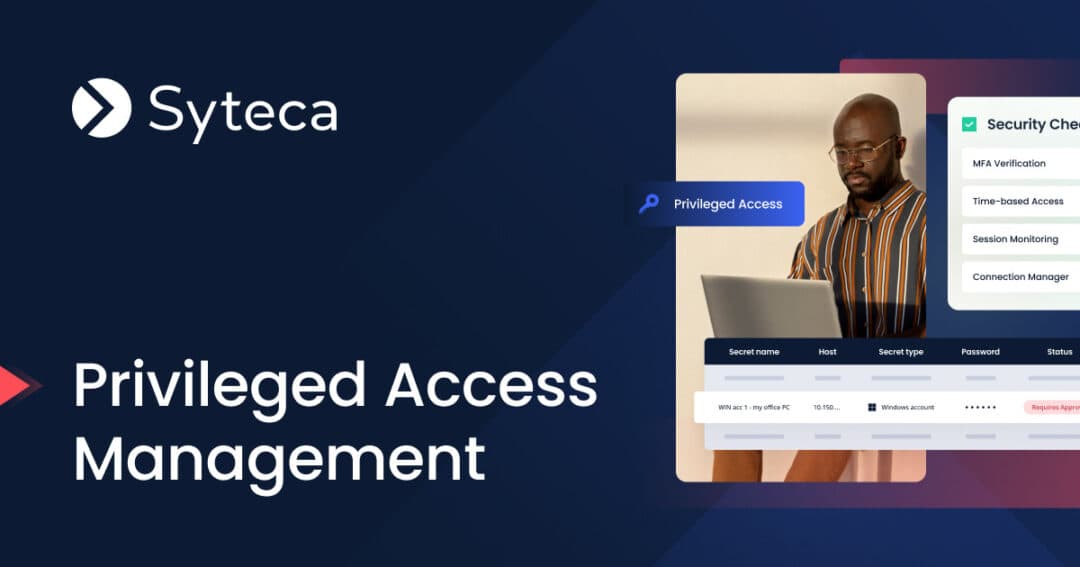
Syteca privileged access management approaches identity threat detection differently from many traditional PAM vendors because ITDR capabilities are built directly into the platform architecture instead of layered on afterward through separate tooling.
That distinction becomes important in hybrid enterprise environments where privileged activity moves constantly between cloud systems, internal infrastructure, third-party access workflows, and remote sessions.
A lot of suspicious behavior never triggers traditional credential alerts because the credentials themselves technically remain valid.
The real warning signs often appear during the session itself.
Syteca focuses heavily on session intelligence and continuous visibility into privileged activity across environments. The platform combines PAM functionality with identity threat detection capabilities, such as:
- Credential vaulting
- Session recording
- Real-time behavioral alerts
- Continuous session validation
- Automated incident response
- Session blocking
- Privileged elevation management
- Multi-factor authentication
- Just-in-time access provisioning
- Secure remote vendor access
One of the more interesting parts of the platform is how heavily it emphasizes operational visibility instead of only credential management.
Security teams can monitor user behavior continuously while detecting unusual activity patterns during active privileged sessions rather than waiting until suspicious access becomes a confirmed incident.
The platform also supports cloud, hybrid, and on-premises deployments without requiring extensive infrastructure redesigns during onboarding.
That flexibility appeals strongly to enterprises trying to improve identity security visibility without creating another large operational project around PAM implementation itself.
2. CyberArk
CyberArk remains one of the largest names associated with enterprise privileged access security, but the company increasingly positions itself around broader identity security rather than traditional PAM alone.
The platform combines privileged access controls with:
- Identity security analytics
- Privileged session management
- Endpoint privilege controls
- Secrets management
- Secure remote access
- Behavioral monitoring integrations
CyberArk is commonly evaluated by large organizations operating mature security operations programs and highly segmented infrastructure environments.
Its strength comes from ecosystem depth and scalability. Large enterprises often rely on CyberArk when privileged access workflows intersect heavily with broader identity governance and enterprise security programs.
At the same time, the platform’s operational complexity can become a significant factor during deployment and long-term administration.
3. BeyondTrust
BeyondTrust focuses strongly on reducing excessive privilege exposure while improving visibility into privileged behavior across enterprise systems.
Instead of treating privileged access strictly as a credential management problem, the platform emphasizes reducing standing privileges and monitoring activity more continuously.
Capabilities include:
- Privileged remote access
- Endpoint privilege management
- Session monitoring
- Credential management
- Least privilege enforcement
- Vendor access security
BeyondTrust became especially relevant as remote work and third-party access workflows expanded rapidly across hybrid enterprise environments.
The platform often appeals to organizations trying to reduce attack surfaces while improving operational visibility into privileged sessions simultaneously.
4. Delinea
Delinea positions itself around simplified privileged access management with growing emphasis on adaptive identity security and behavioral analytics.
The platform combines PAM capabilities with identity-focused visibility features designed to help organizations identify unusual privileged activity patterns earlier.
Core functionality includes:
- Credential vaulting
- Behavioral analytics
- Session management
- Least privilege controls
- Access governance
- Application access security
Compared to some larger enterprise PAM ecosystems, Delinea often feels more operationally manageable while still supporting hybrid infrastructure and identity security initiatives effectively.
That balance appeals strongly to organizations trying to strengthen privileged access visibility without dramatically increasing operational overhead.
5. One Identity

One Identity approaches PAM and identity threat detection through a broader identity governance strategy.
The platform focuses heavily on connecting privileged access controls with enterprise-wide identity visibility and policy management workflows.
Capabilities include:
- Privileged password management
- Session monitoring
- Access analytics
- Identity governance integrations
- Policy enforcement
- Secure access workflows
Organizations already operating mature IAM environments often evaluate One Identity because the platform aligns PAM functionality closely with broader identity governance programs.
That integration becomes especially valuable in hybrid enterprise environments where privileged identities move constantly across fragmented systems.
6. WALLIX

WALLIX focuses strongly on session visibility and governance oversight around privileged activity.
The platform is frequently evaluated by organizations operating in regulated environments where detailed session traceability and access monitoring carry major operational importance.
WALLIX includes:
- Session recording
- Secure remote access
- Privileged account management
- Access governance
- Credential protection
- Compliance reporting
The platform’s emphasis on privileged session oversight makes it especially relevant for organizations trying to improve behavioral visibility across third-party access workflows and distributed infrastructure environments.
Compared to broader enterprise ecosystems, WALLIX often feels more centered around operational governance and session transparency itself.
7. Securden

Securden focuses on practical privileged access controls combined with centralized administrative visibility.
The platform supports hybrid infrastructure while emphasizing usability and manageable deployment requirements for security teams trying to improve access controls without introducing excessive complexity.
Capabilities include:
- Password vaulting
- Endpoint privilege management
- Session monitoring
- Secure remote access
- Access approval workflows
- Audit visibility
Securden is often evaluated by organizations looking for stronger privileged activity oversight without adopting infrastructure-heavy PAM environments that require extensive operational maintenance afterward.
Its administrative simplicity appeals strongly to smaller enterprise security teams balancing security improvements against limited internal resources.
8. ManageEngine PAM360

ManageEngine PAM360 approaches privileged access management through centralized visibility and administrative control.
The platform includes identity-aware monitoring capabilities while focusing heavily on improving audit visibility across privileged environments.
Core functionality includes:
- Credential vaulting
- Session auditing
- Password rotation
- Remote access management
- File transfer monitoring
- Audit reporting
Compared to more infrastructure-intensive enterprise PAM ecosystems, PAM360 often feels more operationally approachable while still supporting distributed hybrid environments effectively.
Organizations looking for centralized privileged access visibility without large implementation overhead frequently evaluate the platform for that reason.
Identity security changed what organizations expect from PAM
The traditional PAM model was built around a fairly simple assumption. Protect privileged credentials well enough, and most major risks become manageable. That assumption does not fully hold anymore.
Modern identity-based attacks often rely on valid credentials, legitimate sessions, and behavior that initially looks normal enough to avoid triggering obvious alerts. Attackers increasingly operate inside trusted environments while blending into regular administrative activity.
That is why organizations started pushing PAM vendors toward stronger identity visibility and behavioral monitoring capabilities.
Security teams now want platforms capable of identifying suspicious privileged activity before a credential compromise becomes a larger operational incident.
Session intelligence became much more important
One major shift across the PAM market is the growing importance of session intelligence itself.
Enterprises increasingly care about:
- Behavioral anomalies
- Session visibility
- Access context
- Continuous validation
- Real-time response actions
- Identity risk detection
The focus moved away from static access controls toward understanding how privileged identities behave during active sessions across hybrid infrastructure environments.
That shift explains why platforms combining PAM and ITDR capabilities continue gaining attention across enterprise security programs.
Modern PAM platforms are becoming identity visibility platforms
The line separating PAM, identity governance, and threat detection continues getting thinner. Organizations no longer want disconnected security layers where privileged access management, behavioral monitoring, and identity threat detection operate separately from each other.
Instead, enterprises increasingly evaluate platforms capable of combining visibility, access control, session intelligence, and automated response workflows inside unified operational environments.
Syteca stands out particularly well in this category because the platform integrates identity threat detection directly into PAM workflows through continuous session monitoring and behavioral visibility rather than treating ITDR as a separate external capability.
For many enterprises operating a hybrid infrastructure, privileged access security is no longer simply about controlling who logs in.
It is increasingly about understanding what happens after the session begins.